Author Archives: disq2332

About disq2332

I'm Gail Z. Martin and I write epic fantasy, urban fantasy and steampunk--so far! My newest series is Scourge: A Novel of Darkhurst. I'm also the author for the Chronicles of the Necromancer series, The Fallen Kings Cycle, The Ascendant Kingdoms Saga, the Deadly Curiosities urban fantasy series and co-authored with my husband, Larry N. Martin, the steampunk series Iron & Blood.

Keeping the Fandom Flame in a Sci-Fi World

by Gail Z. Martin

What do you do when the fantastic becomes commonplace?

Back in the day, early in the 20th century, sci-fi had a lot of ground to cover. Rocket ships, ray guns, space travel, light-up gadgets—there was no limit to what could be imagined.

A funny thing happened on the way to the future. Reality caught up—and sometimes passed—sci-fi. Space shuttle launches became ho-hum. Middle school kids carry cell phones far more advanced that Uhura’s entire communication panel, let alone Kirk’s communicator and Bones’ tri-corder put together. Our cars not only talk to us, they plan out our route, dial our phones and can call for help if we get stuck. The Internet happened.

Personally, I think that the closer reality became to sci-fi, the harder it’s gotten for the genre to keep up. Maybe that’s why fantasy does so well—it’s easier to surprise us in the past than to predict a future more mind-boggling than the one in which we already live.
There’s a hidden benefit to this shift. Long ago, it was difficult for the average person to imagine a ray gun future because it was so vastly different from what someone living in a rural community in the pre-World War II world experienced, a world that for many people still lacked indoor plumbing and electricity. As sci-fi converged with the real world, it became mainstream.

One quick run through the programming on TV shows plenty of plots hinging on scientific thrills and wonders—as well as fantasy elements and the paranormal—that are on every network and channel, not just Syfy. Books that at one time would have been considered “fannish” become mega-bestsellers, like Harry Potter and Charlaine Harris’s Sookie Stackhouse books. Role-playing games broke out of the basement thanks to video gaming and took over every living room in America. Thanks to Cartoon Network, anime elements are as accessible as sushi at your local supermarket.

How do you keep the fandom flame? In my opinion, fandom wins when it embraces this new crop of readers, gamers and movie-goers and includes programming to attract them. Instead of considering mass-media newcomers as second-class, value their perspective and create ways to draw them further into other elements of fandom by exposing them in positive ways. Put the “fun” back in “fan” and stop taking fandom quite so seriously. Realize that the passing of the torch is inevitable, and is best done with grace and humor.
Older fans often remember the sting of exclusion from the “mainstream” culture. Let’s make sure fandom shows a more welcoming face now that we have seen the future….and they are us.
Leave a Comment

Filed under Fandom, Gail Z. Martin

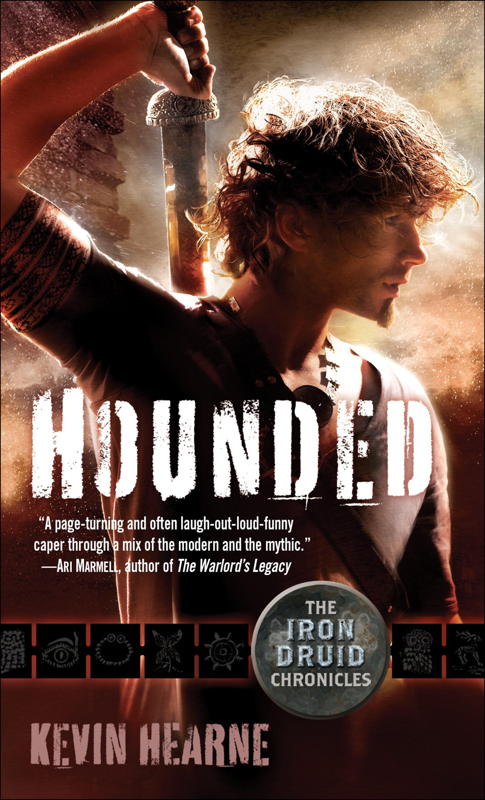
Kevin Hearne’s Hounded is Out!

Given that I’m on a deadline (Void City Book 4 is due in to my editor by May 31st) and Kevin Hearne’s new book is out, it seemed like the perfect time to give another cool author (because he’s cool ya know) a little web love, but not the paid site sort of way or the… yeah.  So, before I embarrass myself further… Here’s Kevin:

First, I must thank J.F. for letting me hang out on his blog. Like all of the Reluctant Adults, he is a bag full of Awesome to go. Plus, he and I share the same cover artist, Gene Mollica.

As part of the publicity for my urban fantasy debut, I’ve written a series of guest posts that are droppin’ all over the place. You can see a full list of the posts over at my blog. The big, ginormous one is over at John Scalzi’s Whatever’>https://whatever.scalzi.com/”>Whatever blog, where I’m featured on his recurring feature, The Big Idea.

Some of my Twitter peeps wanted to hear about my path to publication, so I’m going to cover that here.

I was raised on a diet of comic books and Hamburger Helper, and in my teen years I mixed things up a bit by adding Van Halen and Mountain Dew. I was (and am) a guitar-rock nerd. My reading tastes outside of comics were largely sci-fi and fantasy.

In college I got the writing bug after reading Ken Kesey’s One Flew Over the Cuckoo’s Nest. The voice of Chief Bromden was so compelling to me and I wanted to do something like that. I spent the next ten years failing—as in, I started novel after novel, but never finished one. I read a bunch of “how-to” books but never attended a class or a convention. Maybe those how-to books messed me up a bit; I kept trying to write things the books said made a good story, but I didn’t really like those kinds of stories.

Once I decided to chuck their advice and write to please myself, I finished a novel called The Road to Cibola. It took me six years and it’s a steaming pile of pig shit, but it was an invaluable experience because it taught me exactly what it took to write a novel and I knew now that I could finish one. The Road to Cibola had a rambling mess of a plot and wasn’t really marketable—as I discovered once I tried to write a query letter for it—so I turned my efforts to writing an epic fantasy. That only took me three years. I sent it out for submission directly to a publisher and got a response in two weeks that I’d passed the first round of edits. I couldn’t believe it! While I waited to hear more, I kept busy with other projects. I’d been reading lots of urban fantasy and lots of Vertigo comics written for aging fanboys like myself, and I came up with an idea for a comic about a Druid who could talk to his dog. I was focusing primarily on the magic system and making things look cool, but as I got a few pages into it, I realized it might make a decent urban fantasy novel. I mentioned this to some nerd friends of mine and got shot down (which is the subject of The Big Idea post), and after that I wrote Hounded in eleven months as a defiant gesture. Nerds do that.

All this time I was waiting to hear more from the publisher who was sitting on my epic. Seeing that submitting without an agent was ridiculously slow, I decided to try to get an agent by querying the urban fantasy. I sent my query out to twelve

agents I found on Agentquery.com. Out of that first round, I got two requests for partials, one full, and nine form rejections. The partial and full requests also ultimately rejected me, so I tweaked things some more and sent out another round to twelve more agents. Almost the same thing happened—one partial request and one full. The agent who made the full request ultimately offered me representation—Evan Goldfried at Jill Grinberg Literary Management. (To see my successful query, head over to the’>https://www.biting-edge.blogspot.com/”>the blog of Leaguers Jeanne Stein and Mario Acevedo.)

Evan had me had me fiddle with the manuscript a wee bit and then he sent it out to nine publishers after Labor Day. Two weeks later, September 25, 2009, four of them bid on Hounded and two sequels at auction. What a difference an agent can make, eh?

I chose Del Rey and couldn’t be happier with the way my covers turned out and all the support they’ve given me. For any of you trying to get published now, I’d recommend getting an agent if possible—but go about it carefully, please, do your research and follow their submission guidelines! Most importantly, don’t give up. Keep writing and learn from your failures. I’m not a prodigy by any means; it took me twenty years of trial and a whole lot of error before I got it right.

I hope you’ll give The Iron Druid Chronicles a try—it’s full of nerdy goodness, plus action and naked death goddesses and a talking dog. You can read the first 59 pages of Hounded here for free if you’d like, and of course it’s available wherever books are sold. Thanks again to J.F. for letting me say howdy to you. Please say howdy to me on Twitter @kevinhearne or on my author page on Facebook!

Leave a Comment

Filed under Uncategorized

I Can’t Remember The Last Time I Had a First

By Tina R. McSwain

At this point in my life and paranormal career, it is rare that I experience a “first”. This past week, I had an exceptional one on Monday night. I had completed a speaking engagement in Fort Mill, SC and was returning home. All of a sudden, I noticed the car lights behind me were being blocked out. I thought to myself, “the lid on my travel box must have come off and I am seeing it in the back window”. As I continued down the dark road, trying to see through the back window into the truck bed behind me, I realized it was not the box lid. Instead, it was an unearthly passenger riding along with me in the backseat. Now, this is not the first I am talking about, I have had ghostly hitchhikers before. What happened next was.

I picked up my cell phone to call my CAPS colleague who was driving behind me to advise her that someone had apparently left the speaking venue with me. I dialed the number and waited for her to answer. She has one of those phones that play music before she answers. I heard this music, then nothing. I said her name over and over again but did not get a response from her. What I did get was a response from an elderly lady’s voice saying “help me, I need your help”. That was the first.

I had heard of spirits using the phone lines to communicate, but I had never had this happen to me until Monday night. Quite surprised and somewhat taken aback, I thought about pulling over. It was about this time that my colleague called me. She asked, “Tina, did you call me? I saw the number, the call connected, but I couldn’t hear you”. Excitedly, I began to explain the reason why. I quickly concluded our conversation, and turned my attention to the lady in the backseat. I could now feel her presence as well as see that she had dark gray hair and was wearing a blue blouse or jacket. While driving north on I77, glancing in the rear view mirror from time to time, I began to speak to her directly. And in case you’re wondering, as a Spirit Rescuer, I did give her the aid that she had asked for, and helped her to move on.

Leave a Comment

Filed under Tina R. McSwain

Why book fans need media and gaming fans (and vice versa)

by Gail Z. Martin

I run into some groups of fans who have a “separate but equal” view when it comes to conventions. Some book fans get twitchy around fans whose primary experience with the genre comes via gaming, movies and TV. Multi-media fans sometimes don’t “get” what all the excitement is about listening to a bunch of authors talk in a hotel ballroom.

Can’t we all get along?

I’ll be the first to admit that I consume the genre in multiple ways: books, music, movies, TV, anime, costuming, and when time permits, role playing games (video and old school). For me—and for many fans—consuming the genre in more than one way deepens the experience.

Don’t get me wrong—I love books. After all, I write them. But I also enjoy the genre when it’s presented well in a variety of formats. I’ll get something different out of each experience. Experiencing the story in ways that stimulates multiple senses makes it more memorable, more tangible and more pleasurable.

That’s why I think that the books vs. media “controversy” is a tempest in a teapot. Book and multi-media fans have a lot they can learn from each other. Working together with respect for each other’s perspective and experience, they can gain a whole new way of alooking at their favorites. They can serve as cultural translators for each other, and in the process, find treasures in formats they might not have otherwise explored. I really believe book fans need media and gaming fans—and vice versa—because together they provide a more well-rounded and wholistic fandom, with roots in the past but comfortable and fluent in the present.

It’s worth the effort to bridge the divide. Fandom is stronger—and more fun—when we work together.

Leave a Comment

Filed under Books, Fandom, Gail Z. Martin

Metaphysical Entity

By Tina R. McSwain

This category includes beings that are neither human nor demon but something in between. While our modern world may scoff at tales of leprechauns, imps, sprites and fairies, centuries of stories and alleged encounters make them all too real for many cultures. Leprechauns are of course associated with Ireland. The other creatures listed above are most notable in Great Britain and other European countries. To this day in Iceland, roads and construction projects are planned very carefully so as not to disturb Elfin dwellings. Such an imposition is said to infuriate the little people, who promptly retaliate by taking apart or destroying any machinery left on the construction site.

There are countless culture-specific supernatural creatures; the hopping ghosts or hungry ghosts of China, the fanciful mix of objects, animals and humans into the ghosts of Japan, the elementals and dragons of medieval society. While some of these seem ridiculous to mention, they are included for reference. The cultural background of your client will determine how they describe paranormal activity as well as how they react to it. These topics need to be presented in order to give a broader view of paranormal beings.

Leave a Comment

Filed under Tina R. McSwain

Bringing up the kids in the (fandom) faith

by Gail Z. Martin

As a parent, I know that—intentionally or unintentionally—you instill your values by example into the next generation. Your kids see what’s really important to you—by your actions more than your words.

Many parents struggle to instill their cultural heritage, religious outlook, political world view or moral compass into their offspring. But one of the things I’ve seen been consciously transmitted by fan parents to their children is the fandom bug.

Kids learn by example. They notice the kinds of books you read, the video games you play, the movies you take the family to see. Fan parents delight in sharing all of these elements with their kids . Sometimes, it becomes a rite of passage. At what age does a parent decide a child is old enough to read certain authors? Play certain video games? See particular movies? In many families, a life-long memory is created when a parent passes along their well-worn 20-sided dice to a child. “You’re old enough to have these,” the parent says. Even better, they sit down and play through the dungeon together.

I see lots of families who attend conventions together. My family attends DragonCon and Con Carolinas with me. They get to play while I’m working, and play they do. And they’re not the only ones. I see families with little kids, young parents with babies in front carriers, families with toddlers and families with college students. Sometimes, whole families will dress with a theme for masquerade. Often, kids and teens stay decked out in costume for the whole weekend. They may not always attend the same panels, but they are sharing the fandom experience, transmitting it to the next generation by example, and deepening their relationship through shared cultural touchstones.

Cross-generational fandom is a beautiful thing. And you know what? The kids are alright.

Leave a Comment

Filed under Fandom, Gail Z. Martin

What is Smudging?

By Tina R. McSwain

We recently spoke about “Spirit Rescue”. One of the techniques used in spirit rescue is the practice of smudging. Smudging is a process whereby you light white sage and let it burn. This practice dates back to the earth’s native peoples. While this sage is burning and emitting smoke, you walk around the entire home or business and let the smoke into every room. This is usually done in a clockwise pattern and The Lord’s Prayer is said while walking about.

This ceremony is intended to clear the area of negative thoughts, energy or spirits, and keep them at bay in the future. Other herbs that may be used are cedar and sweetgrass much in the same fashion.

The performer of the ceremony must be of pure heart and knowledgeable in the practice that they are conducting.

Leave a Comment

Filed under Tina R. McSwain

The Graying of the Fan—Or Not

by Gail Z. Martin

I attend more than a dozen sci-fi/fantasy conventions each year, mostly along the East Coast. One of the topics that comes up often in conversation, if not as the actual topic of a panel, is the fear in some areas that fandom is graying and that young people aren’t embracing the genre.

I just don’t see it.

If anything, the Millennial generation—those folks now in their teens and twenties—are the most sci-fi saturated generation in history. They teethed on Buffy, came of age with Harry Potter, immersed themselves playing Final Fantasy, navigated the Twilight phenomenon, and exist in a world where a huge percentage of the books, movies and TV shows have a supernatural/paranormal bent. It’s almost impossible for them to avoid the genre. These young people played with light sabers as kids and went trick-or-treating as anime characters.

But here’s what over-40 fans need to accept—the next generation of fans are a multi-media fandom raised in a multi-media world. Few of them are going to go back and read pulp stories from the 1930s or 1940s—why should they? Not only were those stories, however much they may be revered as classics of the genre, written fifty years before they were born, but the sci-fi in them isn’t amazing to people who played with computers in day care, are indigenous citizens of the Internet and navigate iPads, iPods and cell phones with the fluency of a Borg.

I’ve found that when people lament the decline of fandom, there’s really a wish for fandom to remain primarily book oriented, and, if truth be told, on books published a while ago. Yet, as futurists should know better than anyone, time marches on.
I’ve been to cons that eschew media and gaming where people ponder the lack of young fans. Then I go to multi-media cons like DragonCon, and I see where all the young fans are. The next generation of fans want to celebrate the genre as they’ve come to love it—and that goes beyond books to gaming, anime, movies, TV and the Web. Speak their language, honor their interface with the genre, and they will come—in droves.

Something amazing happens at multi-media cons. Older fans discover elements of the genre that they’re surprised to like. Younger fans get switched on to authors who were published long before the fans were born. And just like on a Star Trek episode where two alien races have a positive first encounter, the whole thing works surprisingly well.

Leave a Comment

Filed under Books, Fandom, Gail Z. Martin

Native American Entities

By Tina R. McSwain

These spirits are as diverse as the many Native American tribes themselves. This is a very broad category that cannot possibly be covered here. My intent is to but introduce the concept.

In this country, some people have had what they consider very real encounters with what they believe are Native American “skin-walkers”. The term “skin-walker” has variable meanings depending on tribal affiliation. While some describe these creatures as something close to a werewolf, others consider them witches with a supernatural ability to transform into various animals. Most Native Americans typically have a positive attitude towards “magic” and its practitioners, but these are thought of as “witches” who have honed their abilities through acts of evil. This twists them into something more than human.

The powers they possess can only be obtained by killing another member of the tribe. This disrespect for the basic morals of tribal society and human decency turns skin-walkers into outcasts. They are feared and hated by the other members of the tribe. It is said that their animal forms are slightly deformed because of their evil nature.

In recent years, some paranormal places have been considered hotspots of skin-walker activity (the most famous being Utah’s “Skinwalker Ranch” or Marley Woods). The otherworldly goings-on include everything from apparitions, cryptid creatures, UFO sightings and cattle mutilations.

Native American culture also brings us the “chindi”, a sort of avenging spirit, released at death to attack those who offended the deceased. Chindi are dangerous, single-minded entities. It is said that even being near one can cause “ghost sickness”; a sometimes fatal wasting away of the infected person.

Many people believe that the phenomenon of “shadow people” is somehow related to Native American mythology. These shadow beings have been witnessed in cemeteries, homes, and even in the vicinity of Indian burial grounds. At this point no one is sure of their exact origins. Some believe them to be evil-natured while others consider them protective spirits. Some even claim they are from another dimension.

In the folklore among many Native North American tribes, appear water babies that are small in human form, and inhabit lakes, streams, springs, and other bodies of water. They are not malicious, but do at times play tricks on humans, and are feared.

There are countless culture-specific supernatural creatures; the more familiar you are with the culture and beliefs themselves, the more you can understand the various entities the people fear.

1 Comment

Filed under Tina R. McSwain

Techno Babble For the Modern Vampire

20110322-102057.jpgBy

J. F. Lewis

Dracula never had an app for that.

He simply didn’t. If you’ve ever read Les Klinger’s Annotated Dracula (and you really should. Les is frick’n awesome… read his Annotated Sherlock Holmes while you’re at it) you already know that Dracula by Bram Stoker was a techno thriller. Shorthand was cutting edge stuff. Train schedules were mind-boggling. And when Van Helsing told Nina that she “had the man brain”, it was a compliment about how intelligent she was. After all, only Nina could keep anything complicated straight in that bunch of vampire hunters.

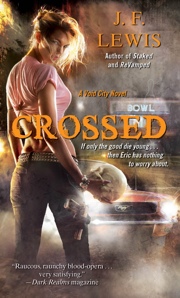
In the Void City series, though. Eric does keep up with the times. He can’t remember how to check his voicemail, but he does check email, surf the internet, and play the occasional video game. (Les has not yet had the occasion to do an annotated version of my books, BTW. Though if he did, there would no doubt be a great wealth of information about old movies, bands, and slang terms from various eras) And if Marilyn were to tell Tabitha that she “had the man brain”, it would be an insult.

But back to Dracula… the struggle to keep up with the mortals (but not the Joneses… them you just eat) has always featured in vampire novels to one degree or another. Dracula struggled with the way the world was changing from an era of more brutal politics and less civilized war. (Isn’t that an oxymoron?) Feminism was slowly rearing it’s head in Dracula’s time. Religious ideals were being brought into question.

Then again, jumping back to Void City, the same kind of struggle is taking place. There is a distinct societal clash for a World War II vet who is still “dating” (or hunting) in a post Y2K world. And in Book 4 (Eric will even have an app for that… though you’ll have to wait several more months to know what I mean by that). What is your favorite modern idea or device an eighty year old vampire (or 100 year vampire? or a 200 years old vampire?) would face in the world of today? What situation would you put them in if you could?

Leave a Comment

Filed under J.F. Lewis