Author Archives: disq2332

About disq2332

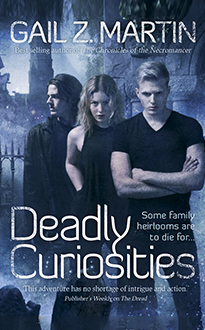
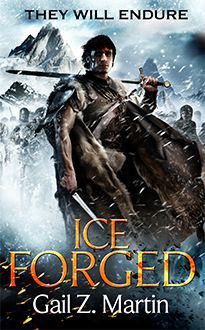
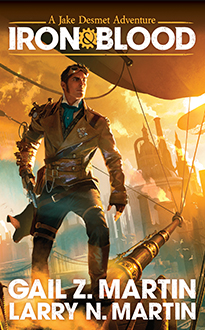
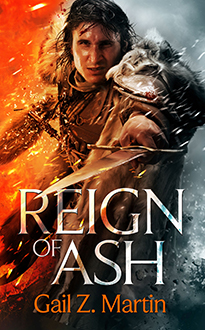
I'm Gail Z. Martin and I write epic fantasy, urban fantasy and steampunk--so far! My newest series is Scourge: A Novel of Darkhurst. I'm also the author for the Chronicles of the Necromancer series, The Fallen Kings Cycle, The Ascendant Kingdoms Saga, the Deadly Curiosities urban fantasy series and co-authored with my husband, Larry N. Martin, the steampunk series Iron & Blood.

Fights, Perils, Barriers, and Annoyances: The art of the middle

by James Maxey
https://dragonprophet.blogspot.com/

So, I’m currently well past the halfway mark of the first draft of my tenth novel, Hush. When I started the book, I knew exactly how it began, since it starts just a week after my novel Greatshadow ends. At the end of that book, one of the surviving characters has made a vow to a dying friend to return a sacred weapon to a temple in a faraway homeland. The book starts with her gathering things she’ll need to make this trip. I also knew exactly how the book ends. The weapon needs to end up back in the hands of its rightful owners. So, I have a first chapter, that should be good for 5000 words. And I have a last chapter, good for another 5000 words. I’m under contract to turn in a novel approximately 110,000 words long. What the hell do I put into the middle 100,000 words?

I wish I could claim to have some systematic approach to logically filling in the giant gap between the beginning and the end of my books. My real approach is to just dive in and start making up stuff, then keep on making up stuff, then make up more stuff. So far, this approach has worked for me. But, somewhere around chapter 10 of Hush, I’d written two fight scenes back to back and I realized I couldn’t immediately use another fight scene. But, it was also too early just to have everyone settle down and talk about the weather for a chapter or two. What I needed, I thought, was a peril. I settled on the ship being damaged in the course of the last fight, and now it’s sinking. Once they saved the ship, there would be time for a talking scene. Then I’d throw in a big obstacle for my characters to get around. Then, it might be time for another fight. I realized as I was thinking through all the upcoming turns of events that I do have a few standard categories of events that my chapters follow. I don’t present these as formulas, but as a potentially useful tool for the next time you are writing a book and you’ve just had your characters jump out of the frying pan, escape the fire, and are now staring at a blank screen wondering, “Okay. Now what?”

1: Fights. Since I write action adventure fantasies, the first thing standing in my characters’ ways are ordinarily other characters. While in a perfect world they could resolve their differences with a friendly smile and a handshake, in my books someone almost always winds up throwing a punch. Fights tend to be inherently interesting, and I sprinkle them liberally throughout my books, but too much of a good thing gets tiresome. So, when even I’m tired of my characters fighting, it’s time for:

2: Perils. The ship is sinking! The building’s on fire! A tornado just picked up the house! Perils are obstacles that threaten the lives of the characters. They can’t be solved by punching someone. Perils are handy in their neutrality. The same hurricane that is dashing your ship against the rocks is also scuttling the zombie pirate ships that were chasing you. Or the evil space tyrant who was going to delight in torturing your heroes flees in his escape capsule as the space station gets too close to the black hole.

3: Barriers. What you need to succeed is someplace you ain’t, and getting to it won’t be easy. The medicine you need to halt the zombie plague is in a locked bunker in Antartica, and you’re on the side of the road in the Arizona desert with an empty gas tank and no bars on your cell phone. Or, maybe the floor plans you need to get past the bank’s security system are in a safe on the 99th floor, guarded by sharks with laser beams. Which leads to:

4: Puzzles. A subcategory of barriers. You’ve captured the Nazi attack plans, but they’re in code. What’s the key? They dying man’s last words were a cryptic quote from Shakespeare’s “Tempest.” What was he trying to tell you? Puzzles can sometimes be large enough to last an entire book, but if you scatter smaller ones throughout your plot they are useful in demonstrating that your hero has virtues other than tough fists and a heart of gold.

5: Tests. Not SAT type problems, but moral tests. The mob boss has just called your cop hero into a private meeting. Call off the investigation, turn over the hard drive with the evidence, and whoah, where did this suitcase full of hundred dollar bills come from? Or, the lead vampire has just pulled off her hood and, gasp, it’s your own mother! You aren’t going to stake your own mom, are you?

6: Annoyances. Of course, if every problem your character faced was some life altering choice or unstoppable foe, you’d burn out your readers pretty quickly. Sometimes it’s out of the frying pan, into the fire, then back into the %$#&! frying pan because the hero dropped his damn car keys. Other times, the good guy is just about to charge into the demon lord’s throne room when his kid sister taps him on the shoulder and asks what he’s doing. He was sure she’d been asleep when he slipped out the bedroom window!

7: Chats. No matter how gung ho your characters are, there are going to be scenes in your book where your characters do nothing but stand around and talk. Frequently, these scenes serve to advance the plot. After a fight, your heroes interrogate a captured guard and learns that the kidnapped princess is locked in the north tower. Now they talk through a plan on how to get her out. Later, they talk through what when wrong when they rescue not the princess, but her hairdresser. Stuff happens. People talk about it.

8: Respites and interludes. Finally, sometimes the world just gives you a break. Right in the middle of Greatshadow, I have a chapter where the characters meet the long lost grandfather of the narrator and are invited back to his jungle village to rest and recover from their wounds. The characters had just survived a long string of fights and perils, and it was a welcome break to have the characters sitting around debating philosophy while dining on an exotic jungle buffet of mystery fruits, raw snails, and katydids. I’ve made this a separate category from the previous one because other talking scenes can unfold while danger is imminent. With a respite, you and your readers can take a deep breath and relax for a moment and find out what your characters are like when they aren’t killing people. These peaceful scenes also help to establish a sense of what might be lost if Evil Triumphs.

Of course, all of these categories are amorphous, and frequently overlap in the course of a single scene. And despite the fact I’ve numbered them, I wouldn’t advise digging out your 8-sided dice from your D&D set and trying to plot a book by rolling random numbers. There’s an ebb and flow to these events that feels natural that you can only develop by actually writing. Still, if you do find yourself wondering “What comes next?” I hope this list helps jog your imagination.
Leave a Comment

Filed under Guest Blogger

Cemeteries

by Casey Daniels

It’s no secret that I love old cemeteries. After all, it was in a cemetery that I originally got the idea for my Pepper Martin mysteries. As to why I was in that cemetery in the first place . . . .well, like I said, I love ’em. I love the history that’s evident in every inch of an old cemetery. I love the art, and the architecture, and the stories that automatically start spinning in my brain when I read names and dates on a family monument, or see a single, small marker set off from the rest and begin to wonder who and what and why.

So if I tell you I spent one day of my Memorial Day weekend in a cemetery,
it should come as no surprise. But if I told you I have relatives who are
not as enamored of cemeteries as I am who came along for the ride, cheese
and crackers, long-dead ancestors, and oh yes, Bailey’s shots . . .

Ah, now we have a story!

It started last fall when some of my husband’s cousins, visiting from
Montana, talked about getting a family reunion together for 2012. Usually
not one to open my mouth without thinking, I opened my mouth without
thinking. (This might have had something to do with the quantities of wine
that were being consumed at the time.) “I,” I announced, “will research
family history.”

And research I did. What I discovered along the way is that I love digging
into family history, even a family that is mine only through marriage. So
far, I’ve uncovered (figuratively speaking, of course!) David’s family back
to the great-great grandparents who arrived from Germany in the 1840s. And
this Memorial Day, I convinced the family to go visit them.

There were seven of us on the adventure. Seven. That’s me, my husband who
tolerates my affinity for graveyards, and five others who (to coin a
phrase) wouldn’t usually be caught dead in a cemetery. We began by visiting
the cemetery where their grandfather, his first wife, and their
great-grandparents are buried. To help things go smoother, I prepared
family trees for everyone, and I was glad I did. It helped explain
relationships and kept who was who straight, especially when we ran into
(another turn of phrase, but since I write the Pepper Martin books, it’s
important to make that clear), great-great uncles, aunts and other assorted
relatives. We trimmed grass, left flags and potted marigolds, and drank a
wee Bailey’s toast to all of them.

Then it was on to visit one set of great-great grandparents at Riverside
Cemetery in Cleveland. Riverside is privately owned, a well-cared for and
beautiful burying ground full of gorgeous trees and pristine paths. I’d
called ahead and the nice lady at the office had a map all ready for us.
Fortunately, Charles (who, in 1890, was run over by a freight train-yikes!)
and Wilhemina Schwendeman were easy to find, buried close to a main
cemetery road. Unfortunately, though Charles’s headstone was fine, Minnie’s
(as the old family documents call her) had fallen over.

Enter my husband and his brother who managed to lift the old granite stone
and get it back into place. A small kindness to do for a woman who traveled
from Germany to Michigan in the 1850s, then came to Cleveland when her
daughter married Bernard, one of the men whose graves we’d visited at the
first cemetery. Another Bailey’s shot, more marigolds left at the graves,
and we were on to our last stop.

These great-great grandparents are the ones who brought my husband’s name
(and my children’s) to this country. They are buried at a city-owned
cemetery tucked at the back of a residential neighborhood. Odds are, most
of the people in the area don’t know the cemetery is even there. Too bad it
hasn’t escaped the vandals.

Headstones are toppled and broken, section and grave numbers are nearly
impossible to find. While the rest of my fellow explorers went off in one
direction, I headed in another and following the cemetery map (it’s not
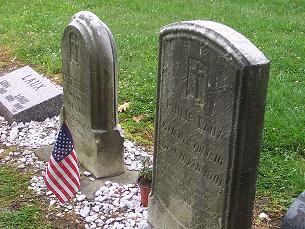
very good), I found what we were looking for, the graves of Phillip and
Katharina. He was born in 1816 and lived until 1901. Think of the changes
he saw in his lifetime! Another toast, more flowers.

It was an amazing day, even those non-cemetery-lovers admitted it. Sure, we
had plenty of laughs, a chance to chat, and our little cheese-and-crackers
picnic. But we also had the opportunity to pay tribute to people who left
their families, their homes and their native languages behind so they could
come to this country and make new lives for themselves. That took a lot of
guts, and I hope those marigolds let them know how much we appreciate it.

Next year, we do the Irish side of the family. No doubt there will be more
Bailey’s involved!

Leave a Comment

Filed under Books, Casey Daniels

Cons 101

by Gail Z. Martin

If you’ve never been to a sci-fi convention, you’re missing the heart of fandom.  Conventions (referred to as “cons”) are gatherings devoted to books, movies, gaming where likeminded people can get together and have a good time.

There is a con somewhere in the U.S. pretty much every weekend.  On several weekends, especially Memorial Day and Labor Day, you’ll have to choose which con to attend.

Cons come in every size and flavor.  Some cons are very small, with only a few hundred in attendance.  These cons have a warmth and intimacy that is hard to find in larger gatherings, but depending on the culture of the sponsoring group, they may seem a little cliquish to outsiders.  Small cons offer a great opportunity to get to meet other fans, have fairly in-depth conversations, and even get face time with the author and artist guests.  Costuming may range from non-existent to intense, depending on the con’s focus.  The vendor room at small cons may not have a wide range of goods for sale, but you’ll have the chance to talk to the vendors and learn more about the products.  Small cons are usually priced inexpensively, and if you’re local and can avoid needing a hotel room, you can further reduce your costs.

Other cons are huge, like Dragon*Con in Atlanta with over 40,000 people and ComiCon in New York and San Diego with well over 100,000 fans.  There’s so much going on at these cons that you won’t build a lot of new relationships.  On the other hand, these cons draw major media stars, bestselling authors, and big-name artists.  Costuming at the big cons is a high art, and you’ll be swiveling your head to see thousands of people who look like they just walked off the set of your favorite movie.  The vendor areas are packed with a huge variety of items for sale ranging from collectible art to pricy costumes and weapons, but it can be difficult to see the merchandise for the crowds.  Because the largest cons draw such a huge attendance, hotels in the area often charge premium rates.  Ticket prices also reflect the scope and depth of the offerings at the event, meaning that the cost to attend the bigger events is understandably higher than for a local con.

While some conventions are multi-media events, catering to books, movies, TV, costuming and gaming, many cons focus on a single specialty.  There are book-only literary cons, all-gaming cons, and cons just for media or costuming.  Make sure you know the focus of the con you’re considering attending before you go so that you’re not disappointed.

If you’re a fan of the genre, you owe it to yourself to try going to a few cons just for the experience.  It can be a wonderful way to discover that you’re not the only one who enjoys certain books, movies or games, and many people have forged new friendships at conventions that last for years.  Give it a shot, and enjoy the experience of having your favorite stories come to life in a whole new way.


Leave a Comment

Filed under Books, Fandom, Gail Z. Martin

Cons in pop culture

by Gail Z. Martin

I just finished reading Carole Nelson Douglas’s Cat in a Kiwi Con, a very tongue-in-cheek mystery set in, of all places, a sci-fi convention.  Having met Carole on a panel at DragonCon (she’s also been on my Ghost in the Machine podcast and is a big favorite of mine), I had to laugh all the way through the book at how spot on it caught convention life as viewed by a mundane suddenly pulled into the action.

It reminded me in some ways of my favorite con send-up, Galaxy Quest.  Only someone who knew and loved conventions could create such a funny and gentle parody that poked fun without making fun.

My kids didn’t really “get” Galaxy Quest until the first time we took them to DragonCon.  We made a point to come back and watch the movie again afterwards.  They laughed so hard now that they were insiders.

Cons are our chance to step into an alternative universe ruled by the fen.  Yet even in our con revelry, there are still touchpoints with those outside of the family.  I was reminded of this at Ravencon where we shared the hotel with a high school prom.  I don’t think it occurred to the seniors at the prom that they were every bit as much in costume as we were, or that it was just as much of a fantasy for them as for us.  (I was, however, very impressed by the Klingon in a formal purple outfit with a parasol.  Nice touch.)

Cons are really a tribal thing, just like football games, NASCAR races, NCAA basketball games and hockey.  Those who get it, get it.  Those who don’t shake their heads and wonder.  I always look at the hotel security cops who patrol at cons and wonder what on earth (or elsewhere) they make of it.  Of course, it’s not so very different from the Renaissance Festivals where I do signings, where everyone speaks some form of Shakespearean English and corsets rule.  (Even Scooby Doo did a take on a mystery at a Renaissance Festival.)

Sure, sometimes pop culture mocks fandom.  Then again, it also mocks sports fans and enthusiasts of just about anything (mocking subcultures has made Wayne Farrell a rich man).  So when you think of it that way, fandom isn’t really quite as isolated as we fen sometimes think.  One man’s beloved subculture is another’s weird gathering.  Viva la difference!

Leave a Comment

Filed under Fandom, Gail Z. Martin

A Journey Begins With…

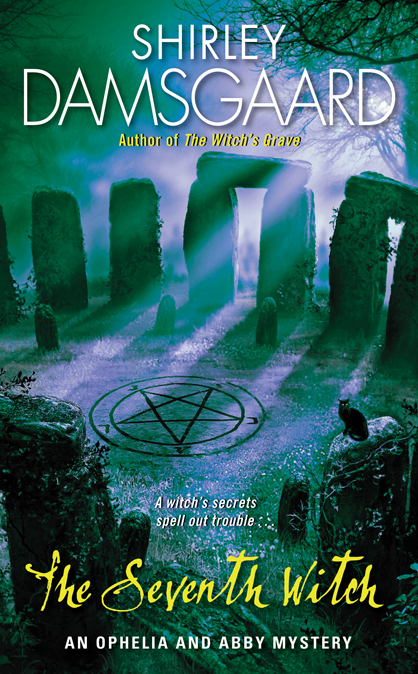
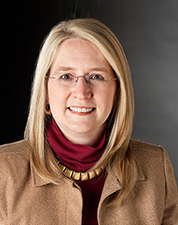
by Shirley Damsgaard

Do you ever look at your life and wonder how you wound up here? I do…frequently. I’m a small town girl, born and raised in Iowa. I had a career outside of my home for thirty years, raised four kids, and am now involved in the lives of my six grandchildren.

I also write about witches, ghosts, and things that go bump in the night…not your usual career choice for someone with my background.

So how did I get here? I’ve always been interested in the paranormal. As a kid, while my contemporaries were reading Nancy Drew and the Hardy Boys, I was reading about Ruth Montgomery and Edgar Cayce. More than once, I scared myself silly by reading books about vampires, ghosts, or werewolves late at night. Later on in my life, those interests in the “other worldly” expanded to include folk remedies.  It was only natural, at least in my mind, that when I started writing, I would combine those interests and create a series whose characters practiced folk magick.

And here’s the funny part, once I made the decision to pursue this career, write about this subject matter, the right people have appeared in my life to push me along. (Need to know about magick as practiced in Appalachia? Not a problem—here’s an invitation to attend an event in Tennessee whose organizers are more than happy to introduce you to some local practitioners. Want to include Native American mysticism in one of the books? Here’s a Native American shaman to interview. )

Because of the above, I’ve come to the conclusion that regardless of my background and regardless of the “how”, right now, I’m where I’m supposed to be. And  it’s been a great journey getting here! I’ve heard amazing stories as related to me by those who’ve experienced them, and I’ve come to realize there’s more to the world than what we see.

With any luck, the trip’s not over yet!

Leave a Comment

Filed under Guest Blogger

Things Readers Wish Writers Would Keep In Mind

by Gail Z. Martin

Last week I talked about things writers wish they could whisper in readers’ ears.  Now it’s time to turn that around and remind writers what readers wish they’d remember.

#1  It’s been a year since we read the last book in the series, so give us some gentle reminders to get us up to speed.  Admittedly, this is tricky for both readers and writers, because each individual reading a book will have forgotten different things than the next reader, and the writer has to cover the waterfront without slowing things down to a halt to recap the last four 600-page books.  Perhaps it’s best to agree to meet in the imperfect middle, with a few mental nudges from the writer (short of an full-blown recap) and the reader’s agreement to go back and skim through the last volume if they’ve forgotten everything.

#2  Just because you, the writer, have worked out ever detail in your head (or your notebooks), readers don’t have to know it.  Some writers get so enthralled by their own backstory that they feel compelled to share it, even when it doesn’t actually matter to the plot.  It’s like reading a book about World War II and having someone drop in a three-page description of the Napoleonic Wars just because you ought to know about them.  However, just because a reader becomes enthralled by a certain element in a book, the writer is not automatically obligated to fill in all the details.  Some things work better when mysterious around the edges.

#3  Speaking of which…writers shouldn’t feel compelled to explain what is better left unsaid (such as faster than light travel, wormholes, or magic), and readers should try not to feel gypped when they don’t get a free physics class as part of the price of the book.  The corollary is that just because a writer is a rocket scientist doesn’t mean he/she is required to explain physics to the poor reader who just wants a space opera adventure.

There.  I’ve gotten it all off my chest.  I hope I’ve touched on some things that other people wanted the chance to say.  Think of something else?  Let me know!

Leave a Comment

Filed under Books, Fandom, Gail Z. Martin

What Writers Wish Readers Knew

by Gail Z. Martin

Writing is a strange business.  We writers labor in relative solitude, and then thrust our work into the public eye.  We get to meet a small fraction of the people who may consider or read our books.  And yet, there is so much we’d like to tell them.

So here are a few things I wish readers knew, or at least considered as they read.

#1—If you’re reading a series, enjoy the fact that you get to know the characters over a period of time.  Realize that you won’t know the people or the situations as quickly as in a stand-alone book, by design.  You can’t hold a book early in a series to the same expectations for quick character development as you can a single book.  And by the same token, if you come into the middle of a series, expect that there will either be some recapping or you won’t know everything.  How different is that from real life?  When you first meet someone at age 30, you don’t know their history all at once, not the way you do with someone you grew up with.  Savor the chance to get a leisurely introduction.

#2—Before firing off an email or a review on how an author got a historic element “wrong,” stop and ask—am I sure?  For example, I was recently taken to task by a reviewer who quibbled with my women fighters, stating that it was a modern view of women unheard of in the ancient world.  Oh really?  Joan of Arc, Elinor of Aquitaine,  Boudicca, Tomyris, Zenobia, and the Trung sisters are just a few examples of stories about ancient women who kicked ancient butt.  Especially in historical novels, pop culture’s understanding of how things were is usually woefully myopic and frequently incorrect.

#3—Please read the book as the author’s vision, and try to enjoy it as such.  Sure, if you’d been writing it, you would have done things differently.  But then it would be a different book.  If that really bothers you, maybe it’s time for you to start writing the books you want to read.  That’s what got me started.  There were stories out there I wanted to read and no one was telling them in the way I wanted to read them.  Who knows?  Instead of writing a review, you could be launching a new career!

Stay tuned for Things Readers Wish Writers Would Keep In Mind


Leave a Comment

Filed under Books, Conventions, Fandom, Gail Z. Martin

Fandom needs its Glee

by Gail Z. Martin

Thanks to Glee, American Idol, Dancing with the Stars and Guitar Hero, my kids know the words to all the songs that were popular when I was in high school, and quite a few songs that made the charts when I was still riding a tricycle.

These TV shows, plus Karaoke and dance video games and the ubiquitous Rock Band have made the hits of the 70s and 80s—and some of the 60s—cool again.  Sure, the songs have an updated sound (no chord organs), and they’re not the original artists.  But as covers go, they’re pretty damn good.  Better than many cover bands I’ve heard.  But what really matters is that these shows and games managed to make songs that were meaningless to teens and  twenty-somethings relevant and relatable.

So how does fandom go about doing the same thing for the favorite books that aren’t on the radar of anyone under 50?

I think one thing that’s important to note about the Glee phenomenon is that no one lectured viewers about the relative merit of the old songs.  Not only that, both artists and performers had to be willing to bend to update the sound.  And it doesn’t work for every song.  I don’t think we’ll be seeing the car crash ballads of the 1950s revived, unless they’re updated for drive-bys. (It’s possible.)

What does this mean for fandom?  Instead of bemoaning the dearth of young people at (some) cons, perhaps some bending is in order from the old guard to entice young fen into the flock.  Media cons certainly have young fans in droves, because they like the fames and the TV/movie tie-ins and the costumes.  How is that a bad thing?  These don’t diminish books; they extend our audience.

At the same time, it’s important to recognize that some stories won’t resonate with readers outside of the time period of the story’s creation because the world has changed too much, even for sci fi.  Stories that are overtly sexist, racist, jingoistic or otherwise exclusive will feel like ancient history, not futuristic tales.  Some stores, beloved as they may be, outlive their time.

The artists whose work has suddenly become relevant to a whole new generation are profiting from the exposure.  The original fans find themselves smiling and singing along, much to the amazement of their kids.  (If you’d have asked me if someday my teenagers would know the songs from Rocky Horror Picture Show, I wouldn’t have bet money on it, and I’d have been wrong.)  In fact, by closing the musical generation gap, these shows have opened a door to a whole new form of togetherness.

Cons can be a terrific forum for shared interests across generations.  I’ve seen it happen.  If it’s not happening at a con near you, tune in to an episode of Glee or fire up Guitar Hero and see if you don’t get a few ideas on how to bridge the gap.


Leave a Comment

Filed under Books, Fandom, Gail Z. Martin

Steampunkery and Finished Drafts

What is that guy talking about with a post title like that?

I don’t know, and I *AM* that guy.

Seriously though, as much as I want to impart revealing secrets about writing and set fire to the hive mind of the internet with knowledge of the ages, what I really want to do is bounce around like a happy puppy. The first draft of Hunted (Void City, Book 4) is done!

But also, I gotz magic cats and crazed scheming steam punk robots!

For a while now, I’ve been working with the guys over at Ignitus Innovation, Inc (formerly The Wandering Men) on a web comic idea. At Crisis Con last year, I was talking to Ashy about wanting to write comics (Marvel Comics, if you’re out there, I have the first three issues of a Devil Dinosaur and Moonboy miniseries already written) and Ashy mentioned that they were interested in doing a web comic that tied in to the their Untold RPG. I asked what the setting was like and he asked me to sit in on a demo later that evening. I did and as a result, GEARLESS: A UNTOLD COMIC was born.

It all seems innocent enough at first: D3rr0 (pronounced Derro) is a Klik Roller trying to help his buddy Kiern (a L’na Dawn, but for our purposes think flying talking magic cat with heavy mystical firepower) find her missing mate Rior. Heh. Yeah… really, that’s all the story is about.

*cough* undead monster *cough*

*cough* hidden agendas *cough*

The first page goes up in a week or so, but in the meantime here is the cover Aviv Or did for the piece:

The logo is changing a little so the “G” is more obviously a “G” and our names will actually be on the next version, but what do you think? You can follow all the future developments over here. Or my Facebook page or @JF_Lewis on Twitter. I pretty much can’t shut up about it.

Leave a Comment

Filed under J.F. Lewis

Paranormally Speaking

By Tina R. McSwain

(My apologies, the Paranormally Speaking segment is running behind from Friday due to illness in the family)

The Second Instance of a First

Last week, I spoke about firsts in my paranormal career and how they are few and far between. Well lo and behold, I have had another. I was performing a cleansing or spirit rescue and had almost finished the house. When I got to the last room, I felt a heaviness or uneasiness coming from the closet. I went over to start my procedure and actually got grabbed by the arm. I have been grabbed before, so this was not unusual. What was disturbing was that I got scratched. For the first time, I had a physical injury from an entity (albeit rather minor).  Undaunted, I continued my quest to cleanse this home, and put the fears of the homeowner to rest.

I succeeded in the end.  I shall chalk this up to a learning experience and revel in the knowledge that no matter how long you do something, you can always learn something new.

Leave a Comment

Filed under Tina R. McSwain