Author Archives: disq2332

About disq2332

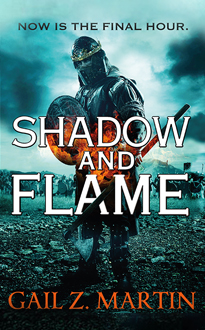
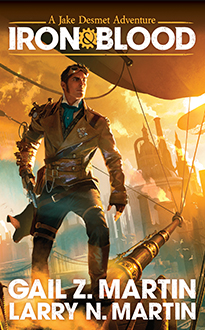
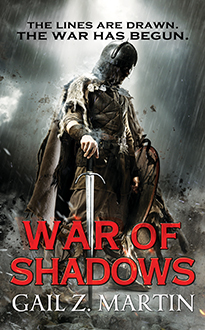
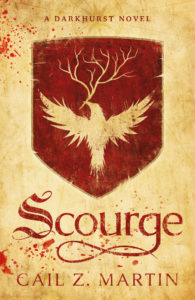
I'm Gail Z. Martin and I write epic fantasy, urban fantasy and steampunk--so far! My newest series is Scourge: A Novel of Darkhurst. I'm also the author for the Chronicles of the Necromancer series, The Fallen Kings Cycle, The Ascendant Kingdoms Saga, the Deadly Curiosities urban fantasy series and co-authored with my husband, Larry N. Martin, the steampunk series Iron & Blood.

An Excerpt from The Master of Whitestorm

by Janny Wurts

1. The Galleys of Mhurga

Jostled from sleep by the bang of a fist against the beechwood oar that pillowed his head, Haldeth started upright, muscles tensed reflexively. But the command he expected never came; no guttural shout followed to transform the night into a misery of hardship, rowing against endless ranks of sea swells. By the dim fall of moonlight through the aft oar ports, Haldeth surveyed the lower deck of the galley Nallga. Every slave remained hunched and still over his loom, but one. The blow which roused him had not arisen from his Mhurgai masters, but from his own benchmate, in a useless fit of rage.

Annoyed himself, Haldeth forgot tact. “Mind your temper!” he whispered urgently.

The man at his side looked up. Confronted by gray eyes and a face which held no trace of laughter or compassion, Haldeth felt his breath catch in his throat. Gooseflesh chilled his skin. Although the air was tropical and mild, he shivered and glanced aside, reminded of the first night his benchmate had been dragged on board. As a battered, soot‑streaked captive not yet past his seventeenth summer, that savage look had been with him then, graven upon young features by the atrocities of the Mhurgai who routinely pillaged and burned towns on the shores of Illantyr. But who he was, and what family he had owned before he was chained for the oar, Haldeth never knew. The boy had grown to manhood in stony silence.

The Mhurgai called him Darjir, sullen one, for the flat, unflinching glare he returned when anyone addressed him. No man heard him speak, even through three years of abuse on Nallga’s lower deck. Haldeth believed him insane.

The cruelty of the Mhurgai could drive the strongest mind to madness, Haldeth well knew. Soured by bitter memories, he shifted a foot cramped by the bite of the galley’s floorboards. Even now, he suffered nightmares of his wife and two daughters; they had been butchered before his eyes the day his own freedom was lost. Daily, he cursed the smith’s constitution which bound him to life and health, for other than hair turned prematurely white, seven years as a galley slave had changed him little. Haldeth envied Darjir’s witlessness. Better to feel nothing than to endure the ache of grief and hatred, helplessly chained.

Sleep alone afforded respite. Determined to take full advantage of the hours Nallga would remain at anchor, Haldeth leaned once more across the oar and settled his head on crossed wrists. Darjir’s eyes followed him restlessly, luminous as coins in the moonlight.

“Neth Everlasting!” Haldeth lifted a resentful fist to emphasize his meaning, since words were wasted effort on a man never heard to utter an intelligent sound. “Bother somebody else, will you? I’ve had enough.”

Darjir flexed callused fingers against the oar. Then he lifted his head and spoke with sudden, startling clarity. “I’m going to get off this hulk.” His tone cut like the wind’s edge in winter.

Haldeth gasped. Shocked, he took a moment to react. No man escaped the bench of a Mhurgai galley alive. Attempts earned agonizing punishment, and since by custom the fate of the offender would be shared by the slaves surrounding him, a man dared not trust his fellows. Through three centuries of marauding, the Mhurgai held no record of slave mutiny; Nallga made an unlikely choice for exception. Caught by an involuntary shudder, Haldeth shook his head. “Be still!”

Darjir moved his ankle. A dissonant rattle of chain destroyed the night silence. “I’ve had enough.”

“Quiet, fool!” Haldeth felt fear, cold as the touch of bare steel against his neck. “The forward oarsman will kick in your ribs if he wakes and hears you.”

“I was named Korendir. And I’m getting off.” The words left no chink for argument.

Haldeth abandoned the attempt. Nervously, he surveyed the forms of the surrounding slaves for any trace of movement. But the lower deck remained peacefully undisturbed, quiet but for the lap of water against the hull. Prompted by reckless impulse, Haldeth met Korendir’s gaze.

“I’m with you.” The steadiness of his voice amazed him. “I’d prefer the knife found me guilty.”

Korendir’s bearded features split into a slow, ill-practiced smile which left the flint in his eyes unsoftened. “I thought you might.”

Haldeth bent once more over his oar, but sleep would not come. Years of suffering had inured him to his fate; he knew in his heart that Korendir’s proposition was nothing but desperate folly. Sweat sprang along his naked back. No mercy would be shown should their plot be discovered; and even if they managed to escape their chains, the Mhurgai collared their slaves with iron. The sea made an infallible warden. Reminded by the slap of waves against the hull, Haldeth hoped the water would claim his life. The knives of a Mhurga seaman never killed. They crippled.

#

“Bhakka! Bhakka!” Nallga’s mate shouted the call to rise from the companionway ladder.

Haldeth roused from an unpleasant dream and knuckled gummed eyelids. Dawn purpled the calm of the harbor beyond the oarport; in the half-light of the lower deck, the unkempt compliment of Nallga’s slaves stirred and stretched. The mate strode aft, thick hands striking the back of any man slow to lift his head. Swarthy, round-shouldered, and short, the officer wore no shirt. Scarlet pantaloons were bound at his waist with gemstudded, woven gold; a whip and a cutlass hung in shoulder scabbards from crossbelts on his chest, companioned by a brace of throwing knives and a chased dagger.

Haldeth shifted uneasily. Mhurgai sported weapons like women wore jewelry, even to the four-inch skewers which decorated their earlobes. Conscious of damp palms and a hollow stomach, the ex-smith cursed his impetuous pact with Korendir the night before. Surely as steel would rust, the plan could only lead to grief.

The mate strutted like a fighting cock down the gangway and glowered over the double rows of captives. “Out oars!”

Haldeth moved at his order, one with a hundred men who unshipped fifty oars counterweighted with lead and held them poised over the sea. A deep rumble sounded overhead, and shadow striped the oarports as the upperdeck slaves followed suit.

“Forward, stroke!”

With a drumbeat to set the speed the shafts dipped, shearing Nallga ahead against the tide. Chain rattled in the hawse as the deck crew raised anchor, but whether the galley left port for plunder or commerce, Haldeth could not guess. He bent his back to the oar, flawlessly coordinated with the man at his side. Korendir’s face remained as expressionless as ever beneath his tangled bronze hair. Except for the memory of his given name, the plot and the promise exchanged in the night might have been hallucination caused by too many years of confinement.

#

By noon, the air below decks became humid and close. Sweat traced the bodies of the rowers, and the waterboy made rounds with bucket, mug, and a sack of dry biscuit. Haldeth chewed his portion, resentfully watching the mate dine on salt pork, beer, fresh bread, and grapes, provisioned at Nallga’s last port. Though the man’s eyelids drooped, his ear remained tuned to the oar stroke; not even the lethargy of a full stomach would lighten his whiphand if he caught a lagging slave.

Korendir paid him little mind. He pulled his end of the oar one-handed and flicked weevils from his biscuit with a cracked thumbnail. Though bugs invariably infested the entire lump of hardtack, he never overlooked one. Haldeth endured the extra weight of the loom without complaint. Bored to the edge of contempt by Korendir’s fussy habit, he nearly missed the discrepancy even as it happened: his benchmate passed up an obvious cluster of insects and raised the biscuit to his mouth.

Korendir tasted the mistake the moment he bit down. He choked, and with a swift, thoughtless gesture, thrust his face through the oarport to spit over the gunwale.

Haldeth tightened his grip on the loom. Should a wave dislodge the oar from its rowlock, Korendir risked his neck and head to a hundred and twenty pounds of leaded beech shoved by water with an eight-yard mechanical advantage. Haldeth cursed and leaned anxiously into the next stroke. More than once he had seen slaves killed by such carelessness.

Korendir ignored the danger. He emptied his mouth with unhurried calm, then executed a pitched imitation of the captain’s gruff voice. “Alhar!” Deflected by water, the shout seemed to issue from abovedecks. “Get topside, thou son of a lice-ridden camel tender!”

The mate flinched. His sallow features suffused with rage, and weapons, mustache, and tasseled pigtail quivered as he sprang to his feet and stamped the length of the gangway. Haldeth felt his heart pound within his breast. But the mate passed without glancing aside, even as Korendir withdrew from the oarport, stupidly intent on his biscuit.

“Great Neth,” murmured Haldeth. Perspiration threaded his temples. The Mhurgai language was not a tongue readily mastered by foreigners; Korendir’s ruse indicated painstaking forethought. Yet however well planned his intentions, Haldeth perceived no advantage to be gained through a trick upon the mate. The man was notoriously bad tempered; his unpleasant mood would shortly be vented upon the hapless backs of the slaves.

Korendir finished his meal. He licked his fingers and returned his hand to the oar, apparently unruffled by the raised voices abovedecks. Between strokes, Haldeth caught fragments of the mate’s protest, clipped short by a bitten phrase of denial; the captain had summoned no one on deck, far less attached insult to such an order. He dismissed the mate amid startled laughter from the crew. Since gossip thrived on shipboard as nowhere else, the unfortunate officer immediately became the butt of spirited chaffing. Haldeth knew even the waterboy would smile at the mate’s idiocy before the incident was forgotten.

Shortly, the red-faced and furious mate stamped down the companionway. Braced for trouble, Haldeth glanced at his benchmate. Korendir never flicked a muscle. His mouth described as grim a line as ever in the past, even when the mate ordered double speed from the rowers with vengeful disregard for the heat.

The drumbeat quickened. Nallga’s oars slashed into the water. Waves creamed into spray beneath her dragon figurehead as the full complement of her two hundred slaves bent to increase stroke. Faster paces were normally maintained only to keep the slaves in battle trim; today, the drill extended unreasonably long. Soon the most seasoned palms split, blistered and raw, each stroke become a separate labor of endurance. Blood pounded in Haldeth’s ears, cut periodically by the crack of a lash as the mate laid his whip across some unfortunate laggard’s back. With lungs aching and eyes stung blind with sweat, he reflected that Korendir’s fellow captives would pound the life from his body should they discover him responsible for the mate’s ugly mood. Yet the man himself bore the agonies of exertion with impassive lack of regret.

The mate’s fury did not abate until the waterboy arrived with the evening’s rations. Sensible enough to recall that unfed slaves made slow passage, the officer restored his whip to his belt and at last slackened the pace. Beaten with exhaustion, Haldeth dropped his head on crossed wrists. Since the evening meal was more lavish than that served at midday, the slaves ate in shifts, permitted use of both hands. But like Haldeth, most of the men were far too winded to eat. Still irritable, the mate paced the gangway, urging them to haste with his whipstock until the night officer reported for duty. Soon after he called the order for rest, heavy sleep claimed the entire lower deck.

Nallga held course under reduced speed, driven by her upper oars. Midnight would bring a reversal, the lower oarsmen resuming work while the slaves above slept until dawn. The wind blew steadily off the starboard quarter, and the galley’s single, square sail curved against a zenith bright with tropical constellations. Mhurga’s fleet plied south in winter, to avoid the cold, storm-ridden waters of their native latitude. In expectation of mild seas and fair sky, the captain retired below, which left the quartermaster the only officer awake on deck. Phosphorescence plumed like smoke beneath the galley’s keep. The lisp of her wake astern described a rare interval of peace between the frailty of wood and sinew, and the ruthless demands of the ocean.

“Bhakka! Out oars! Reverse stroke!” The shout disrupted the night like a warcry, its bitten, authoritative tones unmistakably the mate’s.

The lower deck oars ran out with a rumble. Dry blades lapped into water, muscled by a hundred rudely wakened slaves. Entrenched in the long-established rhythm of forward stroke, the exhausted upperdeck rowers adapted sluggishly to the change. Chaos resulted.

Slammed by the conflicting thrust of her oars, Nallga slewed. Crewmen crashed like puppets against bulkheat and rail. The sail backwinded with a bang which tore through boltrope and sheet. Canvas thundered untamed aloft while the oars crossed and snarled, slapped aside by the swell. Leaded beech punched the ribcages of some rowers with bone-snapping force, and a barrage of agonized screams arose from the benches.

“Oars in! Quartermaster, hard aport!”

Nallga’s captain pounded up the companionway, still naked from his berth. His hand clutched a bleeding shoulder, and his face was purpled with outrage above his broad chest.

“Send the mate on deck!” he bellowed to the nearest seaman. While the galley rounded to windward, he turned on the quartermaster and shouted over the crack of wind-whipped canvas. “What in Zhaird’s blackest pit provoked that nullard’s act of stupidity?”

The quartermaster had no answer. Nallga rocked gently, her bow pointed to windward. A stricken groan from the benches recalled the captain to his responsibilities. He issued rapid orders. Hands ran aloft to subdue the mainsail and assess damage. Escorted by the heavily armed bulk of the ship’s marshal, the healer made rounds of the slave benches to tend the injured. His task took the better part of the night.

The mate spent an unpleasant interval in the captain’s cabin. He insisted he had been asleep in his hammock at the time the shout disrupted Nallga’s course, but repeated denials only made him look silly.

“Thou hast made a fool of thyself.” The captain gestured crossly. “No crew respects an officer whose behavior lacks logic. Perhaps rest will restore thy reason. Zhaird’s hells, it had better. This vessel cannot afford another of thy mistakes.”

Nallga resumed headway at daybreak. Crewmen labored over her sail with rigging knives and needles, and the oar banks stood gapped where injuries laid up several rowers. Seven looms had snapped off at the rowlock; replacements were fitted from a store of spares, and the broken ends stacked behind the lower deck companionway, their lead-spliced handles saved for salvage. Slowly the galley regained her trim, while fore and aft her crewmen whispered that the mate had lost his honor. Perhaps, they said, he had been cursed with madness, and their thoughts strayed often from their work.

Haldeth bent to the rhythm of the oar and furtively studied the emotionless man by his side. Last night’s call for reverse stroke had roused him from deep sleep. With reflexes ingrained through years of obedience, he had run the loom half out before his benchmate stopped it with his fists.

“Wait.” Korendir fumbled his end of the oar and seemingly by chance the blade splashed short of its full sweep. In the following second, the reverse stroke of the lower deck tangled with the entrenched beat of the upper, with disastrous results. The mate had issued no order, Haldeth perceived at once. The voice and words had been delivered with diabolical skill by the one man who would be least suspected: the Darjir named by the Mhurgai never spoke, far less rendered pitched imitations of his masters. Now, Haldeth watched the same oar rise, dripping from the sea. He concluded his thought grimly. If a man sought to undermine the mate’s authority, no method could be better. Except Korendir’s wayward performance had left two slaves dead from punctured lungs; six others gained multiple broken ribs, and their moans of pain could be heard as the day wore on.
“The dead no longer suffer,” Korendir whispered in reply to Haldeth’s silence. “And shattered bones are a small price to pay for freedom.”

His words held a ringing arrogance which allowed no grace for reply. Haldeth did not try. Either Korendir was a madman with a taste for cruelty, or he knew explicitly what he was doing; his implied intent was to release every slave on Nallga’s benches. Haldeth splashed the oar into the swell with bitter anger. More likely his benchmate would earn them all the cold taste of the knife.

#

Nallga entered the tiny harbor of Kahille Island late that afternoon. Mhurgai ships often anchored there, for springs flowed like silver down the islet’s mountain slopes. Most southern archipelagoes relied on rain cisterns for fresh water; controlled by a water-broker, the price came dear. But Kahillans were too unsophisticated to levy a fee, and free water made their harbor a popular port.

Nallga moored inside the barrier reef, and instantly became the target of a flotilla of native ventors in dugouts. Reduced swell offset their nuisance; casks made awkward handling, and the captain wished the loading accomplished as smoothly as possible. The Kahillans did not concern him. A culture without knowledge of metal could traffic no weapons with the slaves, and any guard spared for security left one less man for work.

On the lower deck, Haldeth lounged at ease, grateful for the respite. An unfamiliar deckhand stood watch. Seated on the gangway enjoying a basket of fruit, the man was tolerant of contact between the slaves and the Kahillan merchants. One bold wretch had managed to wheedle himself a bunch of grapes, but the officer was too busy eating to intervene.

Korendir leaned across the shaft of his oar with his head cradled on folded arms. To an inboard eye, he appeared asleep. Haldeth knew he was not. A Kahillan dugout drifted close to the galley’s side, all but moored beneath his oarport. The occupants sat with upturned faces watching a humorous mime as Korendir pretended to hunt lice in his beard. By periodic stretching, Haldeth caught the gist of the performance. The sham puzzled him until he noticed the Kahillan men were clean-shaven. For a people without knives or steel, the fact was a telling oddity.

Evidently Korendir intended to exploit the implications if he could. A final, furious round of scratching raised applause from his audience. The men in the dugout pushed off. Chattering and laughing as if they shared a fine joke, they unshipped paddles and executed a graceful stroke. As the canoe slipped out of sight beneath Nallga’s counter, Korendir shut his eyes and drowsed in earnest. Presently, Haldeth did likewise.

“Baja!” cried a smiling native in accented imitation of the Mhurgai call to rise.

Haldeth opened his eyes in time to see Korendir lift his head and peer cautiously through the oarport. Balanced precariously on tiptoe in the stern of his dugout, a Kahillan man stood with his paddle extended above his head. Lashed to the end was a small wooden box. Korendir squeezed both shoulders through the oarport to reach it. Untying the knots on the waving blade took him an imprudent amount of time.

Haldeth cast a nervous glance at the watch and observed that the sight of a slave straining through an open oarport did not pass unnoticed. The officer spat grape skins onto the deck and shouted a guttural warning.

Korendir ignored him. With an irritable frown, the deckhand rose and unslung his whip.

Haldeth kicked his benchmate’s ankle, imploring prudence. But with the final knot nearly undone, Korendir refused to relinquish his prize. The string fell loose, just as the deckhand strode the length of the gangway and uncoiled his lash. Korendir started to unwedge his shoulders from the oarport, but the deckhand moved first. Seven supple feet of braid struck, splitting through muscled flesh.

Korendir recoiled and skinned his collarbone on the oarport. Silent and sullen, he straightened. Gripping his oar with both hands, he lifted gray eyes and glared at the deckhand. The insolence earned him the whip-butt across the face in a blow that left him reeling.

“Mind thy manners,” snapped the officer. But the slave’s cold gaze left him strangely unsettled. He blotted sweat from his lip and sauntered back to his seat.

The instant the officer’s back was turned, Haldeth caught his friend’s shoulder and whispered, “Was that necessary?”

Korendir shifted his hand, surreptitiously exposing the corner of a small wooden box. Kahillan shaving tools were bound to be inside, and if his brief act of defiance had distracted the deckhand from noticing, Korendir considered the price worthwhile. One bruised eyelid dipped into a wink as he tucked his prize under his loincloth. Curled once more over his oarshaft, he ignored the flies which lit upon his opened back with impressive single-mindedness, and presently fell asleep.

#

In the dark, still hours after midnight, Korendir examined his contraband. Haldeth craned his neck to see over his companion’s shoulder as the box fell open. The contents were immediately disappointing. By the wan light through the oarport, Haldeth discovered that Kahillans removed their beards with slivers of sharpened shell, each imbedded in a layer of pitch to preserve their fragile edges. A slot to one side contained a well-used whetstone.

“Neth,” said Haldeth. Disgust thinned his habitual caution. “Those things are worthless.”

Korendir lifted his head. “They’re precisely what I expected,” he said mildly.

But Haldeth remained too irritable to demand any explanation. Angered that he had permitted himself any hope at all, he hunched at the far end of the oar shaft and sleeplessly waited for dawn.

#

The dishonored mate resumed duty the following day. His jaw was clenched, and his strut more pronounced as he relieved the officer on the gangway. Interpreting the signs as fishermen read weather, Haldeth knew the man’s temper would be short. No slave needed Korendir’s crusted back to remind him how readily the Mhurgai whip might fall. All orders on the lower deck were obeyed as though the rowers sat balanced on eggshells.

Nallga cleared the barrier reef just after sunrise. Driven by both banks of oars, she thrust through the swells under a stiff breeze, her forward slaves drenched in spray.

Accustomed to the shudder of planking against heavy waves, Haldeth rowed, preoccupied by thought. Korendir’s exchange with the Kahillan natives had been outright recklessness. Certain the mate would discover the contraband, Haldeth worried. Sharpened shells were no match for Mhurgai steel. Korendir was crazy to believe in them.

Scarcely an hour beyond the barrier reef, Haldeth noticed cold water wetting his feet. He glanced downward, immediately suspicious of a leak. Nallga was clinker-built, her strakes lashed through eyes on the ribs with tarred cord; one of the lines had given way, and seawater welled between the floorboards with each roll of the hull.

Haldeth swore. Korendir had surely been at work with his shells; the line showed no trace of chafing previously. And with the mate’s competency questioned by the entire crew, now was the worst time to discover hull failure. Yet Haldeth had no choice. Refusal to report a leak carried worse penalty than the whip. Reluctantly, he raised his voice.

“Zhaird’s hells,” snapped the mate. “How did that happen?” Surly and impatient, he rang the brass bell to summon the ship’s marshal since no Mhurga seaman ever walked among the slaves without an armed escort to cover his back.

The mate strode down the gangway to Haldeth’s bench. Even where he stood he saw the water sluicing through the floorboards. The cause was certainly minor, and in his present vicious mood, the protocol which demanded he wait for assistance rankled. The moment the marshal’s weaponed bulk loomed above the companionway, the mate barked orders to hold stroke. Then he stepped down between the slave benches.

Haldeth relinquished his oar and moved clear. Left to tend the loom alone, Korendir stared through the oarport as if unaware that an officer had arrived to inspect the leak.

The mate muttered an insult and added a curt gesture for Darjir to move his feet. Korendir complied without haste. He fixed intent gray eyes on the mate and appeared not to notice the foam-laced swell which rose beneath the poised blade of his oar. The sucking smack of impact tore the shaft free of his grip. The high end of the loom rose in a neat arc and struck the mate on the side of the head.

Haldeth cried out in alarm as pounds of leaded beech thumped into skull. The officer toppled like a felled tree. His weapons clattered over the wood of slave bench, rib, and floorboard. Korendir controlled the shaft with a one-handed motion and swiftly bent over the fallen body of the mate.

Haldeth trembled uncontrollably. A man four years at the oar could never have misjudged the swell; Korendir’s act surely had been deliberate. The marshal had witnessed its entirety, and his muscled, gut-round figure now pounded the length of the gangway. Both huge fists contained knives.

Fear closed Haldeth’s throat and sealed the breath within his lungs. Only divine intervention would spare him from hamstringing, and as he knew the Mhurgai, he would be lucky to escape that lightly. He remembered the mate’s knife too late; the marshal’s lumbering charge had already carried him aft. Haldeth found himself throttled by a hairy wrist, while ten inches of bare steel pricked his exposed back.

“Get back!” commanded the marshal. He spoke past Haldeth.

Instantly obedient, Korendir straightened. He withdrew his hands, which surprisingly held no weapon, but instead had supported the mate’s shoulder to hold him clear of the bilge. Salt water welled beneath the floorboards, lifting plumes of blood from the man’s split scalp. His tasseled braid was already sodden scarlet and his body lay ominously still.

Korendir shrugged, artfully emphasizing empty hands. The marshal snorted in disgust, but his death grip on Haldeth relaxed slightly.

“Zhaird’s own fool, thou art, to have made such a move,” he muttered to the unconscious mate. Then he fixed unfriendly eyes on Korendir. “Ship that oar, slave, and make certain it causes no further mischief.”

The marshal raised his voice and summoned Nallga’s healer. The man arrived, accompanied by a brace of deckhands who removed the mate from the bilge under the vigilant eyes of the marshal. After a brief examination, the healer stood up and pronounced the mate dead. He accompanied his prognosis with a clipped gesture toward Haldeth and Korendir.

“Those slaves should both suffer punishment.”

The marshal crossed his arms over his belted chest and spat on the deck. “I think not,” he said. “Why ruin two fine strong backs? The mate’s own carelessness earned his death. I saw. No hand held the oar which struck Alhar down. Any fool who thinks himself clever enough to walk alone on a slave deck well deserves a split skull.”

“The captain must decide,” retorted the healer. “I doubt the injury to Alhar was an accident.”

The marshal shrugged. He extended a hand for the healer’s satchel and helped the man back onto the gangway. A crewman arrived to replace the departed mate, and both officers retired abovedecks.

#

Interrupted at breakfast by news of Alhar’s misfortune, the captain heard the marshal’s account through without comment. But when the healer insisted the slaves be tortured in retribution, Nallga’s commander spared no patience for tact.

“Zhaird’s hells, I’m well rid of that incompetent excuse of a mate!”

The healer frowned. “That’s a dishonorable way to account for an officer who was murdered in thy service.”

The captain’s face went white. “Alhar’s weapons were not touched.” He qualified with menacing clarity. “Slaves who kill usually have courage enough afterward to strike a blow in self-defense. We’re short-oared enough without wasting the morning carving sheep.”

The captain sized the healer up in a manner that withered the reply in the man’s throat.

“Get thee gone from here,” he finished. “Quickly, or I’ll teach thee the meaning of insubordination with a rope on the end of a yardarm.”

The healer backed through the doorway, his satchel forgotten in his haste. The captain booted it out of the cabin with such violence that the medicine flasks shattered within. With no pause for apology, he rounded on the marshal.

“Clear that oar and get the joiner to work on the leak. Lock the slaves in the sail room, and don’t trouble me again concerning the matter.”

#

Confined in the semi-darkness of the sail room, Haldeth shivered as the sweat chilled on his body. The stroke of the upperdeck oars rumbled through the bulkhead at his back, and he breathed air thickened with the smell of mildewed canvas. The new location held nothing by way of advantage. Stout chain secured him to the ring set in the hatch grating, and a guard stood watch beyond the companionway. The man would not sleep at his post; every sailhand down to the waterboy had suffered repercussions from the captain’s foul mood. Haldeth found no comfort knowing that blame rested on the slaves whose oar had caused Alhar’s death.

As though sensing his companion’s thoughts, Korendir whispered from the shadow, “I never promised there wouldn’t be risk.”

Haldeth’s temper flared. “What have you gained us but misery? You’ve seen what happens to those who earn the disfavor of the Mhurgai. How long do you think it will take you to break, when they strip your back raw because you moved to swat a fly?”

“Be still!” snapped Korendir. “I never act without purpose.”

Haldeth felt his wrist gripped, and a warm object pressed against his palm. He raised it toward the dull streak of daylight which fell through a crack in the hatch grating, clued by the pungent scent of pine before his eyes confirmed. Korendir had passed him the pitch which once had lined the Kahillan box. Deeply pressed in the surface was an impression of the leg-iron key, surely purloined from the ring at the mate’s belt during the confused moment while the marshal had raced the length of the gangway.

Sobered into reflection, Haldeth returned the pitch. Over the stroke of Nallga’s oars, he heard the whispered scrape of a whetstone grinding shell, and in darkness, Korendir’s slow smile could almost be felt.

“I’ll have you a copy,” he said softly. “Wooden, but good enough, since the marshal so kindly oiled the locks.”

Haldeth suppressed a mad urge to laugh. Under normal conditions, the leg-irons were frozen with rust. But the marshal had nearly bent his key while unlocking the slaves for transfer to the sail room. In an irritable fit of efficiency, he had commanded a deckhand to work the slide bars with oil, then inspected the job personally to ascertain the work was done well. For the first time, Haldeth entertained the belief that escape might be possible.

He touched his companion’s arm. “Let me help. I can sharpen while you carve.”
Korendir passed the whetstone and the duller of his two shells, then resumed work in silence. The joiner would repair the leak in under an hour, and the duplicate key had to be completed before the marshal returned to fetch them back to the oar.
© Janny Wurts

Leave a Comment

Filed under Books, Guest Blogger

Pepper Martin has gone international!

by Casey Daniels

Pepper Martin has gone international! The first three books of the series, “Don of the Dead,” “The Chick and the Dead,” and “Tombs of Endearment” have been published in Germany, both as paperback books and on audio.

How about this cover for book #1, “Don of the Dead”? Or the title: Tote Paten Kussen Besser, which as far as I can tell from a Babel Fish translation means Dead Godfather’s Kiss Better.

Oh yeah, that would get me to buy the book!

Curious, I managed to find the German publisher’s website. Here’s the blurb for book #1 (again, courtesy of Babel Fish):

Welcome in the world Pepper Martin, but are warned you: Here is nothing more, as it was. Peppers enrich father, a beauty surgeon, sits because of account fraud with the health insurance company in the prison. Its fiancé, a good-looking broker, lets Pepper fall like a hot potato, when the call of her Mr. Papa the brook down-goes. As much to their plans to become a married lady of the better society and worry only about their back hand and an even Braune.

Armed with a conclusion in history of art, which is wanted to actually never use seriously, Pepper must earn your living costs and gets themselves the most senseless of senseless job: She works as a Fremdenfuhrerin on a historical cemetery.

When Gus Scarpetti Pepper addresses there for the first time, she does not listen at all correctly. Finally the chap is already for thirty years dead. What can have to say to that already largely?

A with a wink Mysterythriller with a due shot romance for all, those already Sookie Stackhouse (temporarily dead) liked . . . in other words: Sex and the town center meets The Sixth scythe!

Let’s hope all that reads better in German than it does in English!

As for the cover, all I think as I look at Pepper in that long, flowy dress is what she’d say if she saw it . . . As if!

Leave a Comment

Filed under Books, Casey Daniels

Conventions—The Advanced Class for Dedicated Fans

by Gail Z. Martin

How can you get more out of your con going?  Here are some ideas to increase your con pleasure.

Take a look at the program , if possible, before you go to the event.  Some cons manage to get the program more-or-less finalized far enough in advance to put the program on the web site.  If you can see the program before you go, you’ll know what your must-do events are and you can agonize over scheduling conflicts far enough in advance to create a plan of action.

Look over the guest list of writers, artists and celebrities.  See if any of your favorites are going, and look for meet-and-greet or special events that showcase those people.  Especially for guests of honor, there are usually special panels and events that are all about them.  Those are ones you won’t want to miss.  For non-GOHs, look for readings, signings and panels where you can get a chance to shake hands, ask a question or get a book signed.

Don’t forget to factor in the video and anime schedules, so that you don’t miss a hard-to-find favorite.  And check the party board as soon as you arrive and then at least once before 5 p.m. to know where the night life is happening.

At smaller cons, there is no separate green room for GOH or panel participants, so you run a good chance of meeting people in the con suite.  If you’ve got your heart set on making a personal connection, best times are during the breaks your favorite author has between panels.  Just be polite and don’t talk so long that you make him/her late for the next panel!

Want to be a SMOF? (Secret Master of Fandom)  Be visible for all the right reasons.  Promote the event before, during and after on social media.  Blog, tweet, post on Facebook and upload photos (all with the intent to make sure everyone looks good).  If the con permits photos and video clips, do mini-interviews with other con-goers and the non-GOH guests (GOH will be booked).  Have a podcast?  Plan to do at-con interviews and set up a schedule in advance with the non-GOH guests.  Anything you can do to be helpful and promote the con will put you on the way to SMOF-dom.

Cons can be expensive, so here are some budget tips.  Although it’s nice to stay at the con hotel, nearby hotels can be a lot cheaper, and  may only be a block or two away.  You could save enough just with this tip to pay your food bill for the rest of the con.  Get a fridge in your room and buy your food (and adult beverages) outside of the hotel.  If you can’t find a quik-mart in walking distance, think about ordering out for delivery food to avoid high-cost hotel meals.  Many room parties also supply late night beverages and munchies, so you can have fun and save money at the same time.  Offer to volunteer.  Cons always need more helpers, and especially if you’re local or can come in early, volunteering can be a way to get free or discounted con admission, plus you might have the chance to spend more time with some of the GOHs or other guests.

Oh, and make sure you have a great time—that’s what it’s all about!


Leave a Comment

Filed under Fandom, Gail Z. Martin

Alarming Trends

by Janny Wurts

Is anyone disturbed by the accelerated hype now appearing as ads targeted for unpublished, new authors, and featured in glitz, at the top of a number of prominent book discussion forums?

Should writers of fiction be bothered about this, given the rapid shifts and changes sweeping the publishing industry, and the trend for young people to mine the internet for information?

Yes, getting picked up by a major house is competitive, and yes, there is a building groundswell, internet driven, toward would-be authors leaping straight into self‑publishing and more, hyping this route as the only or best thing, with passionate, apparently informed expertise. I could show you the boxful of business cards such authors have handed me at public venues, or the disks of e books, made at home. This is publishing, geared for the future, right?

Why am I disturbed?

Because all online sources, even the overwhelming bulk of the information that’s become so prolific is not alike. There is a difference between such traps, and the genuine article.

Too many of these links are direct advertising, not to help newcomers actually reach a valid reading public, but are, in fact, hype geared toward stealing your cherished dreams and your shirts, and poised to take advantage of a wide reaching arena of total ignorance. Some of these sites are after your pocketbooks, folks, and you will never, ever make the springboard to where you want to go, from there. In fact, the opposite.

More sadly, not just predatory businesses are riding the information wave – many honest, well-meaning people who are enthusiastically touting self-publishing their novels on forums as the means to your ends actually haven’t an honest clue. Or they’ve burned themselves out submitting substandard material (or never even tried, just listened to doomers and gloomers) until they believe the traditional career path is hopeless. I have seen blogs and forum discussions where the clueless expound on the facts of the industry for the even more clueless, with no sound counter-argument or professional experience in evidence behind such soapbox trumpeting.

An article was written in the SFWA Bulletin, recently, where several old hand pros on a panel reported being hotly contradicted by a chorus of self‑published clueless authors – who were, in effect, preaching that the way to be noticed by, or break in to, a legitimate major house was to sell books behind a vendor’s table at conventions and book fairs, and to keep doing this behind a stack of self-printed titles, until such zealous efforts invited approached by a real editor who would offer a contract from a big publisher. Louder still, is the groundswell of insistence that e publishing on your own is the quick ticket, and who needs an editor anyway?

Wrong steer! Yes, I have heard the myths and the stories “out there” – but in fact, the real route to a paying contract is not selling your own books off your car tailgate at malls, or setting up shop with a paypal account!

Fiction publishing is a legitimate business, and there is a professional way and manner in which to apply for serious success.

Now, before the knee jerks, I am not condemning all comers to self-publishing – recently, certain non-fiction works are earning their marks, here, and there are many cases where writers who have been professionally established before, and through a published career course, have gained sound knowledge of production, editing, and professional graphics – these folks have a developed readership, presumably, toward which to target their efforts.

I am not saying all self published new books by unknown names are without merit. I haven’t read all of them to generalize in that way. There are genuine small presses and independent publishing houses, too. I am not referring to these!

My concern is targeted toward the enormous ignorance about how the industry actually works, and the whacked out “advice” being proliferated on the internet, that is seeing too many enthusiastic young talents sold short. If you have dreams of writing fiction, by all means pursue them with your whole heart, but please take the time to get educated and know the ropes, first!

Don’t take the blind plunge into the morass of myth, and waste your money, or fall headlong, uninformed, into the pit of self e publishing and exhaust your hopes before ever taking up the challenge to make the bar and achieve a professional career. The tag line, that implies, in effect, “connect your book to mega tons of eager readers” is not necessarily what it’s cracked up to appear.

Presses who take your money and make a profit producing your manuscript into a bound book, then do nothing, are very much alive and advertizing, and you bet, collecting your eager-beaver bucks to publish your work. If you pay for this service, that is a vanity publisher, and not the same thing as a publisher who contracts your publication rights, pays an advance, prints and markets your book, and actually does do the work of distributing and marketing.

While “publishers” who hook you to pay upfront for your book may be years in the business, and make every effort to pose as their counterparts, they’ll have plenty of fine print protecting them from your ignorance when you are dumped with your substandard press run, and don’t know what to do beyond give it away to your relatives. Other venues in fact are real wolves. Many are styled as “agents” and “POD” (print on demand) houses that are in cold fact, actual scammers. Others are fleecers, just as misleading and hurtful. You pay them to produce your book, or find a publisher for you, and you get nothing substantial at all in return.

Read the websites, WRITER BEWARE, and PREDATORS AND EDITORS.

The content can help illuminate what to look out for, where to be guarded, and how to recognize a legitimate venue. Below, I offer a few simple guidelines.

Tip #1: The money flows TO the author FROM the publisher or agent. If you are paying for a service like being published, paying for readings and evaluations – I suggest that might ring an alarm, because that is not flowing payment to the author! These venues are to be differentiated from a genuine professional editing service – where a real copy editor or editor offers their expertise to the public for a freelancer’s fee – do learn how to recognize the difference, and if you are buying a legitimate service, know when it is of value and why, or if it is simply unnecessary.

Tip #2: Learn your craft. It’s up to you to create saleable work. If you do, the publisher pays you, and their own production staff will handle both edit and copy edit and print the book at no charge to you. The legitimate publisher will distribute the copies to the major chain shops, and handle all of the selling. If you learn your style, grammar, and fiction technique properly, you should not need an editor in order to submit and sell your manuscript to a name professional house. If you can’t write a story, if you don’t know what story is, (the book, Story, by McKee could assist you) if you don’t know the craft distinction between narrative voice and dialogue – then you need to get a solid book on fiction writing. (I favor Dwight V. Swain’s Techniques of the Selling Writer) If you like hands on learning, consider one of the very long established reputable workshops for fiction – like Odyssey or Clarion – attend and learn to apply the sound nuts and bolts of the trade to your efforts. Workshops worth attending for popular fiction are well known, and have years of reputation for teaching new writers who actually go on to sell their manuscripts.

Can’t afford a fiction workshop? How serious are you – you’d go to college to get a degree for any another professional job. Can’t manage to buy two or three books on style and craft? Then try what I did, when I was just starting, use an inter-libary loan service to get the titles you need for learning.

You’re underage? Stuck on the wait, while you save money for the above? Then mine your favorite authors’ websites for posted, free information. You might be surprised how many will offer tips, helpful links, or maintain blogs or web pages filled chock full of great free advice. I have created a tips page based on what I found valuable from my experience. It has some sound basics. Do you know how your manuscript should be professionally formatted for submission? Are you familiar with proof reader’s marks? Do you know how to write a cover letter, or submit a query to an editor? Do you know how to sidestep, or breeze past, a writer’s block?

Do you understand etiquette? I’ve been amazed how many blaze beginners breeze in with an e mail to ask about breaking in, or worse, dump an attachment of their entire manuscript into my in box – first presuming I am a teacher, or coach (I’m not, though I do sometimes volunteer writer’s workshops, one on one, to raise funds for charity auctions.} More bumptuously irritating, many of these enthusiastic hopefuls blatantly have not ever bothered to check the tips page I’ve provided for aspirants – which properly would have answered many of their questions in the first place.

Flinging unsolicited e mail at a working author is not the same thing as approaching one politely at public events where attendees are invited to interact with professionals – sometimes opportunities may be welcomed at informal signings, or at conventions which feature panels that are oriented toward helping aspirants – where hopefuls are encouraged to hear advice from established old hands. Questions are acceptable, too, where working editors in the field sometimes appear to speak. Many such venues will schedule panel discussions geared for new writers. Use this chance to hear the facts from the horse’s mouth.

Live in the middle of nowhere and can’t wait to feed your dream? Look at author’s blogs, or seek out discussion threads on those book forums where authors are vetted for professional credentials. Then read the threads where professionals tend to gather to share business information with each other. Search and read the archived posts on the blog, Miss Snark – which professes to be written by a pro agent – entertaining, bitterly brutal, but very much on the mark about the realities and falsities of cracking a difficult field. Disabuse yourself of the idiot illusions, that Greatness Waits Without Effort, and instead, motivate yourself to learn how to tell a dynamite story. Strive for excellence – and encounter what that means in terms of discipline. Then sort the welter of information to discern the most direct course to realize your dream. The rewards and many, and well worth the long haul.

Science Fiction and Fantasy Writers of America, in a recent article in their Bulletin, asked how their professional membership could reach out to new writers and help them find legitimate sources for information. This is my bit.

Leave a Comment

Filed under Guest Blogger

Why Aspiring Writers (Should) Love Cons

by Gail Z. Martin

So you want to be a writer?  Get thee to a convention!

Conventions are fantastic networking and educational opportunities, and they cost a fraction of what many writing conferences charge.

Most conventions have some kind of writing track where you can hear published writers talk about writing and ask them questions.  This is a golden opportunity to learn about the craft from people who are already doing it successfully.

Writing track panels also often include panels on creating characters, writing a good plot,  building dialog, etc.  There are panels with agents and editors sharing tips on how to find an agent or submit a manuscript.  And if you’re lucky, there’s Alan Wold’s wonderful two-day writing workshop.    There are also panels on promoting your books,  publishing e-books, self-publishing and other aspects of the writing life.

Cons are also a great way to meet authors and get to ask your own questions.  Make it low-key, and don’t be a stalker, but you’ll find that many writers are very approachable at cons because they go to connect with people.  Use common courtesy, but don’t be afraid to approach someone and ask a question (try to make it a reasonably quick one).  You’ll do best if you’ve obviously done some homework ahead of time, so don’t ask obvious questions like “how do I find an agent?” (Writers Digest Books have whole books on the topic—read these first and ask a more advanced question.)  Don’t ask a writer to read your manuscript (he or she really doesn’t have time), but it’s OK to ask short technical questions.  Many genuine and long-lasting fan/writer friendships have begun with a conversation at a con!

Leave a Comment

Filed under Books, Fandom, Gail Z. Martin

Heroes

by Michael A. Ventrella

www.michaelaventrella.com

Jeremy Wembley grabbed the broom by the handle.  He took forceful steps toward the back of the room where Patrick stood unaware.   Patrick paid no notice as Jeremy shortened the distance between them, and seemed completely oblivious to Jeremy’s presence.

Jeremy raised the broom just as Patrick turned around.

“I’ll sweep the stockroom now, Mr. Brenner,” he said.

Jeremy knew that if he continued to impress his boss, it would not be long before he could get that promotion—and soon after, get the real reward he desired:  night manager of the Fredricksburg 7-11 on West Norton Avenue.

Unless his arch-nemesis, that kiss-up Eric Stoher got there first…

All the elements are there.  There is a goal the main character wishes to reach, and an obstacle that can prevent him.  There is character development and conflict.

But, you know, who gives a flying you-know-what?

The fact of the matter is that we want to read stories about people and events that are larger than life.  We want to read about heroes to do great things, make clever comments, overcome great odds.

This is nothing new.  The ancient Greeks didn’t do plays about the guy who cleaned the stables.

And I am no exception.  My books have been about wars and world-shaping events and the heroes whose presence made a difference.

However, at the same time, I have consciously avoided the standard hero that is a mainstay of much of fiction (and especially fantasy).   You know the type – the Chosen One from Prophecy who is the seventh son of the seventh son who is the only one who can wield the magic sword Noonah because he has surplus midichlorians and blah blah blah.   Maybe this hero starts off the book as a nobody, but he or she ends up as the World’s Greatest Swordsman or Most Powerful Wizard by the end and thus, being superior to us lowly humans, saves the day.

In my two published novels (ARCH ENEMIES and THE AXES OF EVIL) and in a short story in the soon-to-be-released anthology TALES OF FORTANNIS:  A BARD’S EYE VIEW, my main character is a teenager named Terin.   His problem is that, thanks to a mistake, everyone thinks he’s the Chosen One Who Can Save The Day.

By the end of ARCH ENEMIES, Terin is still running when a fight breaks out and still can barely cast a minor spell.  So what makes him the hero?

To me, what makes a real hero is someone who doesn’t have all those skills and yet, through bravery and intelligence, rises above what is expected and does the extraordinary.   Terin is the hero because he figures out a solution – he finds a way to solve the problem that is more than merely “hitting the bad guy with the weapon until he falls down.”

I like these kinds of heroes because they remind us that we all can be heroes sometimes.

Oh, I don’t mean to knock down the more traditional heroes:  I love Batman and Luke Skywalker as much as the next fan.  But when I create a hero for my stories, they tend to be average people put into extraordinary circumstances who must then find something special within themselves to make things right.

In the sequel THE AXES OF EVIL, people are now thoroughly convinced that Terin has wondrous powers, even though he doesn’t.  Now he’s confronted with a trio of barbarian prophecies which, he later discovers, contradict each other.  On top of this, his liege wants him to get all the barbarians off his land, and a bunch of silly goblins think Terin’s the one who will lead them to victory over the evil humans who oppress them.

These are problems that cannot be resolved by being the biggest fighter.  Terin solves them all by the end of the book through his cleverness and resourcefulness, and by being brave and willing to risk it all.

That, to me, is very admirable.  It’s what I admire about my real life heroes (Benjamin Franklin and Martin Luther King, to name two).   And it’s the kind of hero I like writing about, because I can identify with him and understand his fears and worries.


Leave a Comment

Filed under Guest Blogger

Freebie Friday from Alethea Kontis

Alethea Kontis, our guest blogger this week, has a fun podcast project going where she reads aloud the original Grimm’s Fairy tales. Here is the link to “Cinderella”, : https://aletheakontis.com/2011/05/princess-aletheas-fairy-tale-theatre-episode-14/

Leave a Comment

Filed under Freebie Friday, Guest Blogger

Are magical objects cheating?

by Gail Z. Martin

Imagine that you live in a world where magic is commonly known to be a force of nature.  People and other creatures have the ability to work magic, large and small.  Some natural places concentrate (or repel) magic.  In such a world, is it really such a stretch to believe that natural and created objects could possess their own magic?

I’ve heard some people claim that giving a character a magical object like a ensorcelled sword, a spelled amulet or a rabbit’s foot that really is lucky is cheating.  Funny, but no one ever says the same when a character in an action movie pulls out an AK47.  To my eye, enabling an action movie hero to fight off an entire good army with one automatic weapon and limitless rounds of ammo strikes me as highly improbably, if not downright magical, and yet no one cries foul.

I write about worlds where magic is operative, so obviously I have a dog in this hunt, as they say.  And as with magic itself, I believe it’s important to have rules to keep magical objects and supernatural powers from becoming a “god in a box” type of power to  cheat and take the easy way out.  So here are my “rules” (actually, they’re more like guidelines) for magical object fairness.

#1  Warn the reader ahead of time what the object’s power is.  You can be oblique as to its full power, but the reader needs to know the magical object has limits and isn’t a whatever-the-character-wishes-it-to-be all-purpose magical Swiss Army knife.  Unless it is, in which case, rule #2 applies.

#2  If you’ve got the magical equivalent of a Swiss Army knife (a single object that can do a bijillion things), then there has to be a cost to use it, and the cooler the task the object does, the higher the price for the user.  In fact, the cost should be high enough to give any rational person pause about the danger of relying too much on the object.

#3  Give the hero reasons inherent to his/her character that makes them reluctant to use the magical object except in an emergency.  It can be pride, fear of magic, suspicion as to the object’s true nature, etc., but the hero/heroine should want to be self-reliant until all else fails.

#4  Even when circumstances leave the hero no choice except to pay the price and use the magical object, the hero should still be doing everything he/she can to save the day.  No fair sitting back and lounging while the magical object saves the day, even if you’ve just sacrificed your soul in order to get the object’s assistance.

If you think about magical objects with the same skepticism you have about “helpful” freeware programs for your computer, you start to get the picture.  Sure, the program is “free”, but does it upload malware, a virus, a trojan or some other hidden nasty that will crash the power grid, transfer every last penny out of your bank account or fry your system?  There’s no such thing as a “free” lunch, a free program or a free magical object.  Caveat emptor.

Leave a Comment

Filed under Gail Z. Martin

Molly and Jane Revisited

by Faith Hunter

www.faithhunter.net
https://www.facebook.com/official.faith.hunter
https://www.facebook.com/janeyellowrock

Evan: Today at Witch Central, the interview/blog spot for all things witchy, hosted by the Everhart sisters, we are posting an interview with Jane Yellowrock, the Cherokee shape-shifter / skinwalker who hunts rogue-vampires for a living. This is from a taped interview, transposed to type for the blog, and where possible, parenthetical comments will be included for clarity.

Our interviewer is Molly Everhart Trueblood, a moon witch, and because of the sensitive nature of some of the questions—and answers—this blog will be a closed interview, available to only the supernatural community. No humans have been sent the password to the interview site, and if you have access, remember to share it only people who will appreciate paranormal! I’m Evan Trueblood, Molly’s husband. Welcome Molly and Jane. Take it away ladies.

Molly and Jane (speaking at once): Thank you Evan. Glad to be here.

Molly: And I have to give a special thanks to Evan Trueblood, for producing us today. The rumors circulating in the witch community that Evan is unhappy because of my friendship with Jane are well founded, as noted in the plot of BLOOD CROSS. His generosity today is exceptional.

Evan: (grumbles through his mike).

Molly: Jane, not everyone here knows what a Cherokee skinwalker, also known as a shape-changer or shape-shifter, is. And the myths that surround the Native American skinwalkers are violent and gruesome. Can you enlighten us?

Jane: Most of us prefer to be called American Indian, or AmIn, or by our tribal name, not Native American, which is a moniker probably dreamed up by some D.C. bureaucrat. I like to be called Cherokee. I haven’t done a lot of study about the western AmIn shape-changer mythos, like the Hopi tales, but what I’ve learned about the Eastern Cherokee skinwalker can be pretty awful, with age-related changes in dietary habits that are gruesome, tending toward … um … the consumption of human meat.

Molly: (groans in horror) So, they get old and start eating people?

Jane: Yeah, the tales are pretty nasty. But according to the oldest traditions of many tribes, skinwalkers were originally the tribal protectors and warriors. It was only after the white man came that their numbers began to decrease, and they started acting nutso, which makes me think that my subspecies of human may have been decimated by illness brought by Europeans.

Evan: (interjecting, sounding stern) Our apologies to the mental healthcare professionals and those suffering from any form of mental or emotional anguish.

Jane: Yeah, yeah, sorry. I guess there might be a more medically and socially acceptable diagnosis than nutso, but to get one, a shrink would have to spend time with someone who wanted to eat him, and in a lot less entertaining way than some Hollywood-created Hannibal Lector.

(Jane leans in, intent.) Skinwalkers are a magical subspecies of human, Evan, Molly. Very different from the were-creature mythos, who can adopt only one animal shape. Skinwalkers can adopt the shape of many different animals if certain conditions are met. For me to shift, I have to have some genetic material of the chosen animal, bones with some marrow is best, but teeth with some soft tissue works. And it’s easier if the genetic guidelines for size and mass are equal to the human making the change. Meaning that if the shifter weighs 125 pound in human form, then it’s easier to shift into a wolf or big-cat or other animal that weighed 125 pounds in real life.

Molly: But if you wanted to fly, to be a bird, and it weighed only 40 pounds, or if you needed to be a horse, and it weighed a thousand, what then?

Jane: (sounding hesitant) It’s possible to take mass from, or leave mass with, anything that contains no genetic material, like stone. But it’s dangerous. I don’t like to do it. When I dump mass, I leave something of myself behind, and not just body mass. The smaller brain capacity of smaller animals means that I have to store part of my consciousness—memory, spirit, whatever—in other parts of the animal or leave it behind in the stone. I never know if I’ll get all of myself back. And when I take on mass to change into a larger animal, I always wonder if I’ll drop it all, or get stuck with an extra hundred or so pounds of, well whatever I’d get stuck with.

Molly: Like an extra hundred pounds of stone. Well, if you get stone hard abs and bones hard as stone, it might be worth a little extra weight. (The girls laugh.)

Jane, you had a financially lucrative relationship with the Master Vampire of North Carolina, where you became the only vampire hunter to take down an entire rogue-vampire blood-family—that’s a mouthful, isn’t it?—as told by your writer, Faith Hunter, in the anthology titled Strange Brew. Tell our listeners what took you from your home in the Appalachians Mountains, near Asheville, North Carolina to New Orleans, Louisiana?

Jane: First, let’s clarify that I don’t kill just any vampire. I’m licensed to kill rogue vampires, and there are two kinds. Young rogues are vamps who were turned and not kept shackled long enough to cure, or ferment, or whatever they do to find sanity. This usually takes 10 years or so, during which time they’re under the care of, and dependant upon, their maker or sire. Old rogues are vamps suffering from the vamp form of dementia, which makes them a lot more dangerous than a young rogue, because an old vamp still has his mental functions, but his predatory instincts have gone whacko, and he—or she—has taken to violence.

There aren’t many people willing to take on the job of rogue-vamp hunter. I’d hazard to say that there aren’t 25 in North America and Central America together. And there aren’t that many sanctioned vamp-hunting gigs to be had. For a hunt to be legal, the local vamp council has to sanction the hunt and then call in a licensed hunter. So when the New Orleans council asked me to come for a job interview, I took the chance and made the trip. Katie Fonteneau conducted the interview for the vamp council and hired me. It was a lot of money, and it was a dangerous job. I earned every red cent I made on that one.

Molly: And what made this job so dangerous?

Jane: Whacked out vamps don’t usually eat their victims. This was an old-rogue with a preference for organ meat, livers were his cut of choice.

Molly: Eeeew. (more laughter) But that wasn’t all that made this job dangerous, was it?

Jane: No, there was a lot more. Spoilers, so skip the next sentence if you haven’t read SKINWALKER. The vamp in question turned out to be related to one of the most powerful vamps in the city.

Molly: And the whacked-out vamp, well, he wasn’t a vamp at all, was he?

Jane: (voice firm) I was hired to kill a vamp. The vamp council has issued a statement saying it was a vamp that got sick, and I took him out.

Molly: (Presses the point.) But it wasn’t a vamp, was it?

Jane: If I killed something that wasn’t a vamp, then I could, possibly, be accused of murder. So, it was a vamp, Molly, and that’s all I’m gonna say about it.

Molly: Okay, okay, but for our listeners and readers, there have been hints in this interview that tell exactly what the vamp turned out to be.

Change of subject. Tell me what happened in the vampire hunter community after you killed the vamp who was eating people—and vampires. Y’all. It was eating vampires too—in the party capital of the nation. And don’t fidget as if you won’t answer the question. Come on, Jane.

Okay. Our guest is never one to brag, so I’ll say it for her. There’s a website online for vampire hunters, and it lists contact info, number and difficulty of kills, website addresses, and a scorecard of sorts for each of the licensed hunters out there. It’s managed by a guy called Reach, or Reacher, a mysterious personage in the vamp-hunting community, who has his fingers in a lot of pies.

Our guest, Jane Yellowrock, hovered in the top three vampire hunters nationally for years, but after the photo of the thing she killed for the Vampire Council of New Orleans was posted to her website—and went viral, I might add—she moved firmly to the number one spot, and the price to hire her, moved up accordingly, am I right, Jane?

Jane: (mumbles) I knew I shouldn’t have agreed to do this interview. You’re going all Nancy Grace on me here, girlfriend.

Molly: But—another spoiler—the word in the supernatural community is that Leo Pellissier, Master of the City of New Orleans, is claiming that you, well, you murdered the insane vamp.

Jane: I didn’t murder anyone. I killed the vamp the council hired me to kill. If you read Skinwalker, you know the truth.

Molly: Okay, don’t get grumpy. Lets talk about your love life.

Jane: (laughing, covering her eyes) Oh, God. I knew not to do this interview. Let’s not talk about my love life. It’s so mixed up right now.

Molly: We witches are a predominately female community because our males don’t usually survive the childhood cancers they’re so prone to. So, we’re accustomed to marrying into the human community, having children with our human husbands, and passing along the witch gene only occasionally. With so few shapeshifters around, do you date humans?

Jane: I like humans, and yes, I’ve dated a few. Right now, I’m talking to a human, a blood-servant, and a vamp.

Molly: Anyone you want to tell us about?

Jane: No. No way.

Molly: Okay. Then tell us how the vampires relate to your scent.

Jane: (sounding relieved) Rogues recognize me as a fellow predator right off. I seem to provoke a response that’s primarily aggressive in them. But if they’re young enough, all they can think of is food, so they attack, wanting to kill or subdue and feed. Katie Fonteneau was the first sane vamp I ever met in person. When she got her first, good whiff of me, she attacked. Ditto with her boss, Leo Pellissier, Master of the City of New Orleans. But once he accepted me, the rest of them accepted me, and their perception of my scent changed. I’ve guessed it’s like a pride of lions. Once the alpha accepts the outsider, then the others will too. Now they say I smell like a combo of dessert and sexual challenge. Dangerous. They seem to like it.

Molly: (teasing) Tall, dark, and deadly. For our readers, Jane Yellowrock is six feet tall, has hip-length black hair, amber eyes, wears leather, and is armed and dangerous. Vampires like the way you smell. Okay, moving back to the subject of men. There are hints scattered about that Rick LaFleur is not quite human. Or more than human. Or maybe he is human and you liiiiike him. May we expect further enlightenment?

Jane: The answer to that question will be partially addressed in Mercy Blade, and will be addressed again in Raven Cursed. My writer is still working on that novel. Which means that I don’t know the answer, and for all I know, she might not know. She’s bad about leaving me hanging, you know?

Molly: So there’s a chance he is a skinwalker!

Jane: I didn’t say that, Molly-girl. Ricky Bo smells totally human, not like me, and not like what I remember of my kind, at all. Delectable to my Beast, but totally human.

Molly: I know some of us will be disappointed to hear that. But, that brings us to Beast. Jane is a being with two souls, one a skinwalker, one a mountain lion. What’s that like?

Jane: (sounding snarky) Crowded.

Molly: Come on Jane. Give me something here.

Jane: (sighs) It’s complicated. I have two conscious minds, each very different, trying to, learning to, get along in a body built for shape shifting. When we … merged, I guess is one way to put it … I got some of Beast’s strength and speed, even in my human form, and she got some of my language abilities. She talks to me inside my head when we’re in human form, and I can talk to her when we’re in cat form, though one of us is always alpha. It’s kind of … schizophrenic, I guess. But it works for us.

Molly: How about eating?

Jane: You’re not gonna like this. Especially your vegetarian listeners and readers. I like my steak rare. Beast likes hers on the hoof and freshly dead, raw, and still warm.

Molly: And your writer? The woman who tells your stories?

Jane: (sounding snarky again) Faith Hunter? She likes leafy greens and bean soup and yogurt. Wimp. The only thing we have in common is a love of fine teas, though I may let her teach me to whitewater kayak. It looks like fun, especially the Class III rivers. Oh – and she said to tell you that RAVEN CURSED, the fourth Jane Yellowrock novel, will be out in January 2011.

Molly: (laughing) Perfect timing for a plug Jane! I think that’s enough for today.

Jane Yellowrock, thank you for coming to talk to us. Evan Trueblood, producer extraordinaire and best hubby in the world, thank you.

Evan: It’s been a pleasure. And enlightening. And to all our listeners and readers, we hope you have a good witchy evening, and a good book to enjoy!

Leave a Comment

Filed under Guest Blogger

Why Published Writers Love Cons

by Gail Z. Martin

Go to any literary or multi-media convention and you’ll see a slew of published writers.  Now everyone knows that writers are shy and introverted (or not), so why do they brave the crowds to spend precious weekends hanging out with total strangers?

Certainly the visibility doesn’t hurt.  With today’s decreased book sales, writers have a real economic reason to go out and make new friends who will hopefully try their books, and to remain visible to long-time readers to remind them of new books to come.  Publishers are less and less able to do much in the way of marketing for the average title, so writers are left to create their own visibility opportunities, and cons are certainly a great way to be visible to the core fan audience.

Believe it or not, many writers also just plain enjoy meeting readers and fans in general.  It’s just plain fun to go sit on panels and talk about fandom-related stuff, favorite books and movies and the kind of geeky technicalities that makes other people roll their eyes.  Most, if not all, writers are also fans themselves, so they get a kick out of all the things that make a good con tick—panels, costuming, celebrity guests, etc.

Writers also enjoy networking with other writers at cons.  Since writing is a largely solitary activity, writers enjoy the chance to connect with their writer friends, and it’s easiest to do this at a con.  Look around and you’ll see writers holed up together at meals, over drinks and during parties talking shop.  It’s also good business—at my last convention, I was invited to appear at three different conventions plus asked to send a short story for an anthology.  Lots of writers can tell you how they got an invitation to submit a manuscript or some other project by networking at a con.

And another reason–It’s a day away from the keyboard but related to the genre, so we don’t feel guilty.  It’s work related, but also fun.  Maybe that should be reason #1!

Leave a Comment

Filed under Conventions, Fandom, Gail Z. Martin